

Garissa County has increasingly become one of the most politically dynamic regions in North Eastern Kenya, with leadership contests reflecting deeper conversations about governance, representation, youth inclusion, and gender equality. As the country slowly moves toward the 2027 General Election, political activities in the county have intensified, with emerging aspirants positioning themselves to address longstanding development challenges affecting local communities.
Traditionally, Garissa’s political environment, like much of North Eastern Kenya, has been shaped by clan dynamics, cultural traditions, and male-dominated leadership structures. While women have played significant roles in community development, humanitarian work, and social mobilization, their participation in elective political positions has historically remained limited. However, the rise of new female aspirants signals gradual shifts in community attitudes toward gender representation and leadership inclusivity.
The Women Representative position, created under Kenya’s 2010 Constitution to enhance gender balance in political leadership, has become a critical platform for advancing women’s rights, youth empowerment, and social development policies across counties.
In Garissa, the seat is attracting renewed attention as residents increasingly demand leaders capable of addressing economic hardship, unemployment, healthcare gaps, and education inequality.
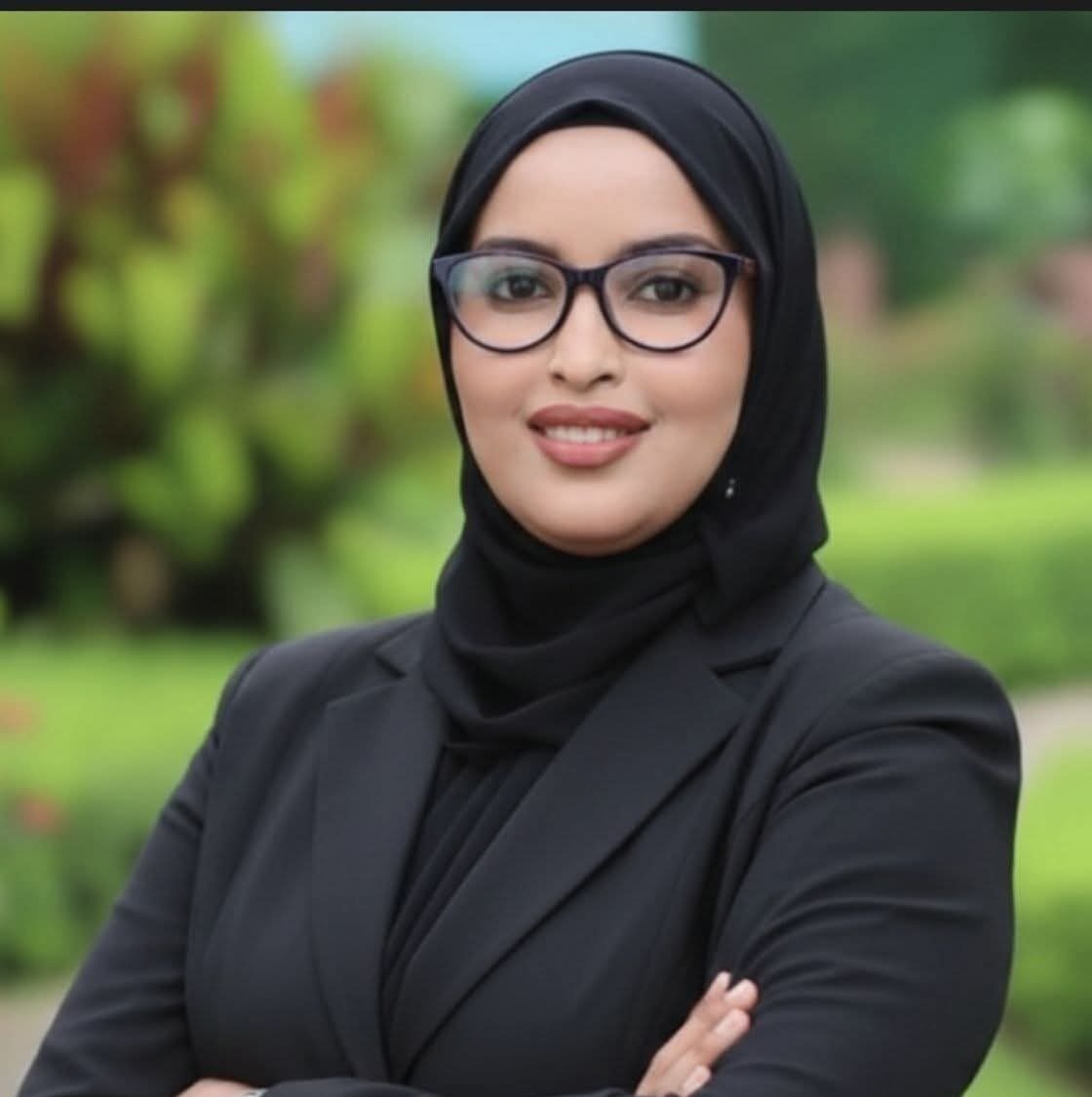
Against this evolving political backdrop, one name is gaining attention among voters, youth groups, and community stakeholders Faiza Sadik, an emerging political aspirant seeking to redefine leadership priorities and expand opportunities for women and young people in the county.
Faiza Sadik: A New Voice in Garissa’s Political Arena
Faiza Sadik represents a growing generation of women leaders seeking to transition from community advocacy and grassroots mobilization into mainstream political leadership. Known for her involvement in social empowerment initiatives and public engagement with youth and women’s groups, Sadik is positioning herself as a reform-driven candidate focused on service-based leadership.
Her political journey is rooted in community interaction, advocacy for economic empowerment, and engagement in conversations around governance accountability and social transformation. Sadik’s growing visibility in Garissa’s political landscape reflects increasing calls for leadership that prioritizes development and inclusivity over traditional power structures.
Speaking in an exclusive interview with Siyad Reports, she outlined her motivations for entering politics, her development agenda, and her broader vision for the future of Garissa County, particularly in empowering women and youth populations.
Faiza Sadik’s Leadership Vision: A Comprehensive Agenda for Women, Youth and Community Transformation
Her political journey is deeply rooted in community engagement and advocacy for social development. Over the years, she has gained recognition for championing initiatives aimed at empowering women and mentoring young people within Garissa County. Her leadership philosophy revolves around service, accessibility, and long-term solutions rather than short-term political promises.
Speaking during an exclusive interview, Sadik highlighted that her decision to run for office stems from personal encounters with the daily struggles faced by women and youth across Garissa. She emphasized that leadership must be grounded in understanding community realities and responding with practical, impactful solutions.
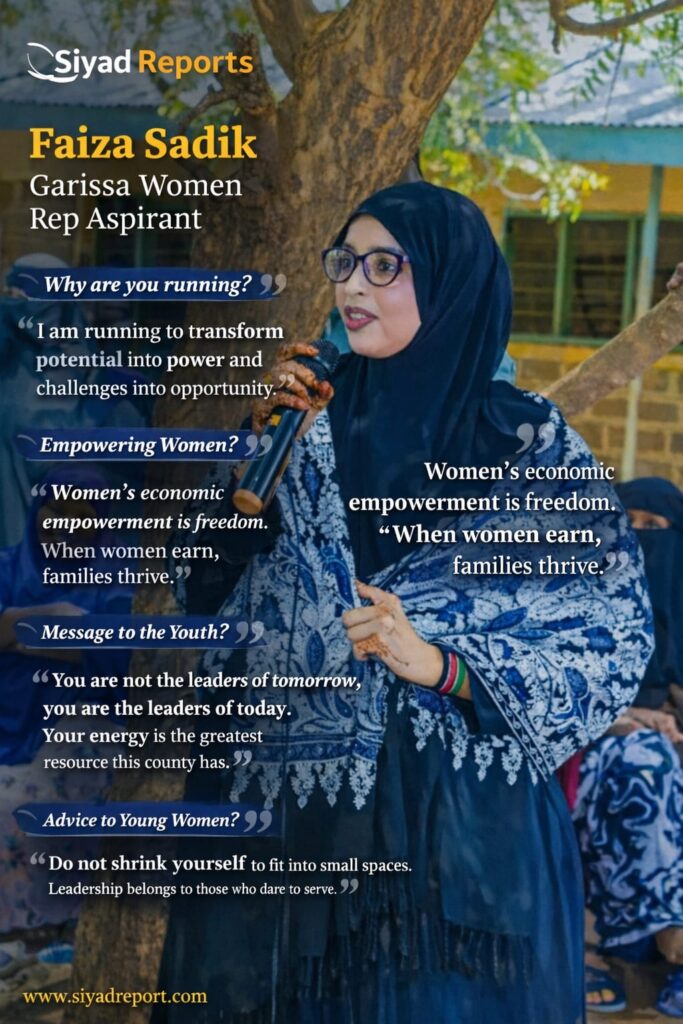
“I was motivated by the lived realities of our women and youth. I have seen the strength of Garissa women, hardworking, resilient, full of potential, yet limited by lack of opportunities. I believe leadership is service, and I stepped forward because I cannot watch talent go to waste. I am running to transform potential into power and challenges into opportunity,” she said.
Faiza’s vision prioritizes economic empowerment as a cornerstone of social transformation. She argues that financial independence is essential in breaking cycles of poverty and vulnerability, particularly among women who often shoulder family responsibilities.
She proposes establishing women enterprise funds at grassroots levels to support small-scale entrepreneurs and expand financial inclusion programs such as table banking and SACCO initiatives.
“Economic empowerment is freedom. I will Establish women enterprise funds at grassroots level. Support table banking and SACCOs. Facilitate access to national government funds like Uwezo and Women Enterprise Fund. Promote vocational training for widows, single mothers, and young women. Create mentorship programs connecting successful women to young girls. Socially, I will push for awareness programs on leadership, rights, and confidence-building. When women earn, families thrive,” she explained.
Faiza believes economic empowerment must be complemented by social awareness programs that strengthen confidence, leadership capacity, and community participation among women. She notes that mentorship networks connecting successful women professionals to young girls could significantly influence career aspirations and self-confidence.
Youth unemployment, which remains one of Garissa’s major development challenges, also forms a central pillar of her policy agenda. Sadik stresses that unemployment among young people is often misunderstood as lack of effort, whereas structural barriers such as limited skills training and capital access hinder their progress.
“Unemployment is not laziness, it is lack of opportunity. I will champion, TVET and technical skill expansion (ICT, plumbing, electrical, tailoring). Digital hubs for online jobs and freelancing. Internship partnerships with private sector. Youth agribusiness and livestock value-chain programs. Access to startup capital. Our youth must shift from job seekers to job creators,” she stated.
She envisions modern vocational training centers equipped with digital technology to prepare young people for emerging employment sectors, including remote digital work and entrepreneurship. According to Sadik, expanding agribusiness and livestock value-chain initiatives could also provide sustainable employment opportunities, particularly in rural parts of Garissa where agriculture and pastoralism remain economic backbones.
Gender equality and protection of women’s rights remain core elements of her legislative agenda. Sadik acknowledges that cultural norms influence social structures in Garissa but insists that traditions should evolve to promote dignity, justice, and equality.
“Culture should empower, not suppress. I will: Advocate strict enforcement of laws against gender-based violence. Push for policies against early marriage. Support safe spaces and legal aid for women. Work with religious and community leaders to promote positive cultural values that uplift women.”
“Empowerment does not mean abandoning culture, it means strengthening it through justice and dignity,” she affirmed.
Sadik emphasizes the importance of collaboration with religious and traditional leaders to ensure community acceptance of reforms aimed at protecting women and girls. She believes inclusive dialogue can help eliminate harmful practices while preserving cultural identity.”
On legislative priorities, she pledges to focus on policies that directly impact women, youth, and vulnerable populations. She underscores the importance of parliamentary oversight to ensure that development funds allocated to counties effectively reach grassroots beneficiaries.
“In Parliament, I will prioritize: Increased funding for women and youth programs. Stronger GBV prevention laws. Monitoring county allocation to ensure funds reach grassroots women. Education support programs for vulnerable girls. Oversight is key, resources must not disappear; they must deliver impact,” she said.
Her governance approach emphasizes accountability mechanisms designed to track resource utilization and ensure transparency in program implementation. She argues that leadership effectiveness must be measured by tangible improvements in citizens’ livelihoods rather than political rhetoric.
She further highlights the importance of participatory leadership, noting that effective representation requires constant engagement with constituents. She proposes establishing structured consultation forums and digital communication platforms to strengthen feedback channels between leadership and residents.
“Leadership must listen. I will, Hold regular town hall forums. Establish ward-level women and youth committees. Create digital platforms for feedback. Have an open-door policy. Representation without consultation is dictatorship. I believe in participatory leadership,” she stated.
Faiza also advocates for sustainable long-term development programs rather than temporary relief initiatives. She proposes scholarship programs targeting academically gifted but financially disadvantaged students, establishment of women cooperative societies, youth innovation grants, and leadership training academies to nurture future community leaders.
“Short-term handouts are not enough. I will implement: Scholarship programs for bright but needy students. Long-term women cooperatives. Youth innovation grants. Leadership training academies for young leaders. We must build systems, not events,” she explained.
Healthcare access remains another key area within Sadik’s development blueprint, particularly maternal health services and reproductive healthcare for young people. She notes that inadequate medical facilities and long distances to health centers continue to endanger vulnerable families in remote parts of Garissa.
“No woman should die giving life. I will: Advocate for improved maternal health facilities. Push for mobile clinics in remote areas. Support youth-friendly reproductive health services. Work to ensure SHA/SHIF enrollment for vulnerable families. Healthcare is a right, not a privilege,” she said.
Education reforms also form a significant component of her leadership vision. Sadik highlights school dropout rates among girls as a persistent challenge influenced by poverty, early marriage, and lack of sanitary resources. She plans to introduce bursary programs, scholarship initiatives, and sanitary towel distribution programs to encourage school retention.
“Education is the equalizer. I will: Campaign against school dropouts. Support sanitary towel programs for girls. Provide bursaries and scholarships. Promote adult education for young mothers. Partner with religious leaders to promote girls’ education. An educated girl transforms generations,” she explained.
She acknowledges that addressing cultural barriers requires sensitivity and inclusive dialogue rather than confrontational approaches. She plans to engage elders, religious leaders, and male champions of gender equality in advocacy campaigns promoting women empowerment and constitutional rights awareness.
“Change must be respectful but firm. I will: Engage elders and religious leaders in dialogue. Promote success stories of local women leaders. Encourage male champions of women empowerment. Educate communities on constitutional rights. Progress works best when it includes everyone,” she said.
Recognizing the importance of collaboration, Sadik emphasizes partnership with various stakeholders including county governments, national agencies, non-governmental organizations, faith leaders, and international development partners to maximize development outcomes.
“No leader succeeds alone. I will work closely with: County Government, National Government agencies, NGOs and civil society, Faith leaders, Development partners. My approach will be coordination, not competition,” she noted.
Addressing Garissa’s youth directly, Sadik called on young people to actively participate in governance and leadership processes. She urged them to register as voters, organize community initiatives, and hold leaders accountable for development commitments.
“You are not the leaders of tomorrow,you are the leaders of today. Stop waiting to be invited. Organize. Innovate. Register as voters. Hold leaders accountable. Your energy is the greatest resource this county has,” she said.
She also delivered a strong message to young women and girls, encouraging them to pursue leadership and professional ambitions without fear or societal limitation.
“Do not shrink yourself to fit into small spaces. Your voice matters. Your dreams are valid. Leadership is not reserved for a few, it belongs to those who dare to serve. Step forward. We will walk this journey together,” she concluded.
Faiza Sadik’s political entry reflects a broader shift toward inclusive leadership models emerging across Kenya’s devolved governance system. Her policy agenda combines economic empowerment, education reform, healthcare access, gender equality, and youth development into a comprehensive strategy aimed at transforming Garissa County’s socio-economic landscape.
As Garissa prepares for future electoral contests, Faiza Sadik’s vision represents a growing demand for leadership that prioritizes grassroots development, accountability, and sustainable empowerment initiatives. Whether her agenda resonates with voters remains to be seen, but her campaign has already contributed to expanding discussions around women’s leadership and youth participation in Garissa’s political future.