

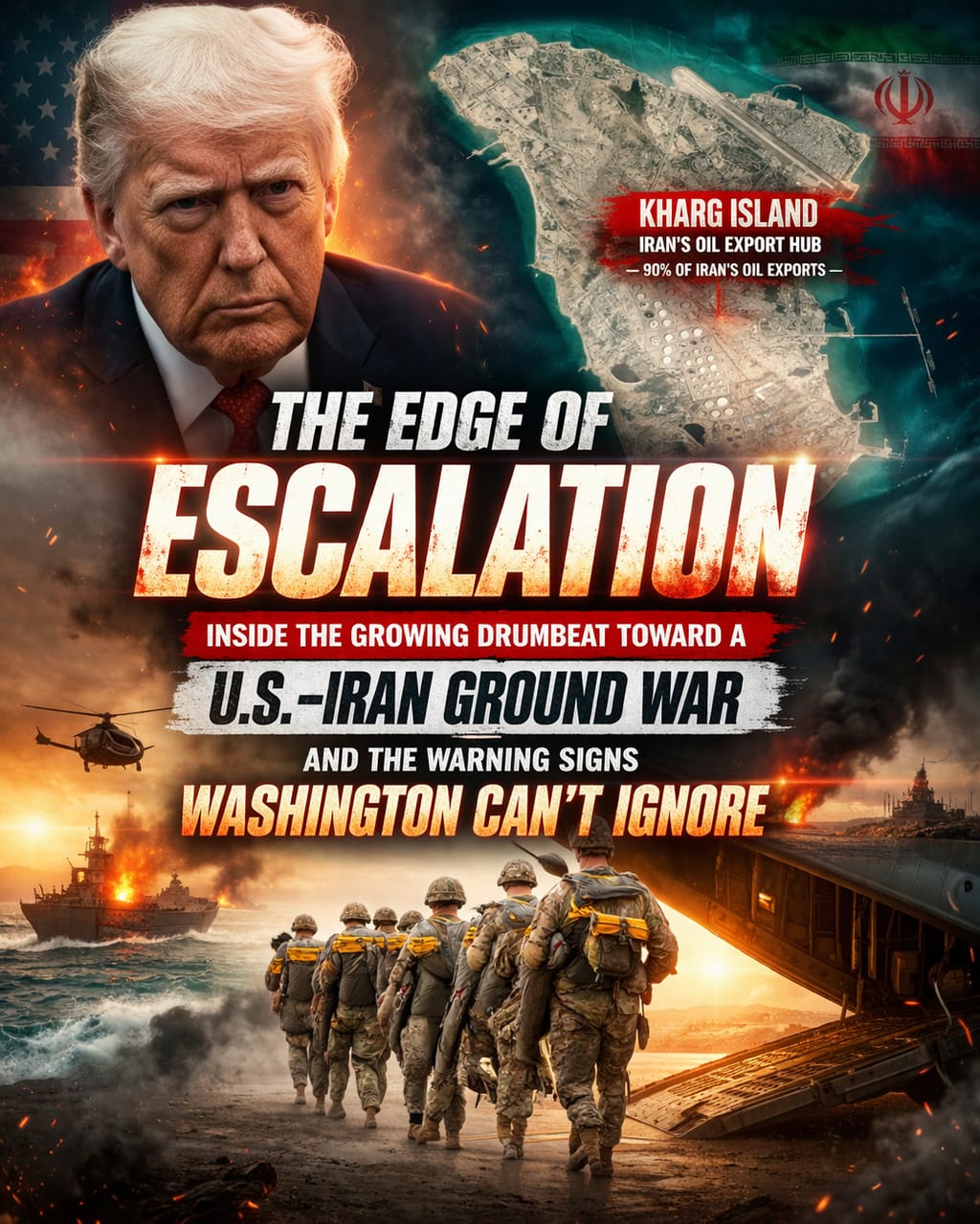
In the fog of rising global tension, when rhetoric begins to harden and military calculations quietly shift behind closed doors, history often whispers before it roars. Today, those whispers are getting louder.
From Capitol Hill to the Persian Gulf from intelligence briefings to political statements, the signs point toward a dangerous inflection point one that could reshape the Middle East and redefine American foreign policy for years to come.
At the heart of this unfolding story is a striking declaration from Nancy Mace, a Republican congresswoman from South Carolina, who has drawn a firm line in the sand. Her words are not vague, not hedged, and certainly not accidental: she will not support sending American troops into Iran.
That position, delivered after a classified House Armed Services Committee briefing, signals something deeper than partisan politics it reflects a widening crack in Washington’s consensus on military engagement.
“I will not support sending South Carolina’s sons and daughters to war in Iran. I won’t do it.”
That sentence alone carries the weight of two decades of American war fatigue. It echoes the ghosts of Iraq and Afghanistan, conflicts that began with confidence and ended in complexity, controversy, and deep national introspection.
When Mace warns against “turning Iran into another Iraq,” she is not speaking in hypotheticals she is invoking a real and painful chapter of U.S. history, one that policymakers are keenly aware of but not always guided by.
Her acknowledgment that Donald Trump has been “enormously successful so far” adds another layer to the narrative. It suggests that opposition to escalation is not necessarily opposition to leadership, but rather a calculated concern about where current strategies might lead. It’s a classic case of supporting the driver but questioning the road being taken.
And that road, according to Mace, is being paved by what she calls the “Washington War Machine.” It’s a phrase loaded with implication a reference to entrenched defense interests, institutional momentum, and the tendency of great powers to drift toward conflict when strategic, economic, and political forces align. Her warning is blunt: “They are trying to drag us into Iran to make it another Iraq. We can’t let them.”
That language reflects a growing unease within segments of Congress. More importantly, it highlights a troubling disconnect. Mace points to a “gap” between what the American public is being told and what lawmakers are hearing in classified briefings. In matters of war, such discrepancies are more than just political issues they are matters of trust, legitimacy, and democratic accountability.
“The justifications presented to the American public, were not the same military objectives we were briefed on today.”
If that claim holds weight, it suggests that the narrative surrounding potential U.S. involvement in Iran is being shaped differently for different audiences. And in the world of geopolitics, that’s often where problems begin.
Meanwhile, across the globe, the tone is no less intense. Mohammad Bagher Ghalibaf has issued a warning that reads like a page out of a Cold War playbook. According to his statement, Iran’s “enemies,” backed by an unnamed regional country, are preparing to seize one of Iran’s islands. His message is clear and uncompromising: any such move will trigger “relentless attacks” on the infrastructure of the supporting nation.
This is not mere posturing. It is strategic signaling.
Iran is effectively drawing a red line around its territorial sovereignty, particularly in the Persian Gulf, where geography and economics are tightly intertwined. The mention of “vital infrastructure” is especially telling it implies a willingness to escalate beyond military targets into economic warfare, potentially hitting oil facilities, ports, and energy networks that are critical not just to one country, but to the global economy.
All eyes, inevitably, turn to the Strait of Hormuz, the narrow maritime corridor through which roughly a fifth of the world’s oil supply flows. Control over this chokepoint has always been a strategic prize, and in times of tension, it becomes a potential flashpoint.
Analysts now suggest that within the inner circles of Washington strategy, there may be consideration of a limited, high-impact operation something decisive enough to claim victory, yet contained enough to avoid full-scale war. In military terms, it’s the classic search for a “quick win.”
Enter Kharg Island.
This island is not just a piece of land; it is the backbone of Iran’s oil export system, responsible for approximately 90% of its crude shipments. To seize it would be to strike at the very heart of Iran’s economy. From a strategic standpoint, it’s a tempting target. From a political standpoint, it could be framed as a decisive blow. But from a military and geopolitical perspective, it’s a gamble of the highest order.
Because here’s the catch: Iran is not Iraq.
Unlike Iraq in 2003, Iran possesses a far more sophisticated and layered defense system, particularly around critical assets like Kharg Island. Reports indicate that Tehran has already reinforced the island with additional troops, advanced air defense systems, and extensive minefields. These are not symbolic measures they are practical preparations for a real, anticipated threat.
U.S. intelligence assessments reportedly warn of “high risks,” including the possibility of significant American casualties. The mention of MANPADs (man-portable air-defense systems) and anti-armor mines suggests a battlefield environment designed to neutralize technological superiority through asymmetric tactics. In simple terms, it means any attempt to take and hold the island would not be quick, clean, or predictable.
Gulf allies, who would inevitably be affected by any escalation, are also sounding the alarm. Their message is cautious but clear: the risks outweigh the rewards. They understand that any conflict in the Gulf doesn’t stay contained it spills over into shipping lanes, energy markets, and regional stability.
And then there’s the question of aftermath.
Even if a U.S. operation successfully seized Kharg Island, what comes next? Holding territory in a hostile environment is a different challenge altogether. Supply lines, constant threat of counterattacks, and the political optics of occupation would all come into play.
Iran, for its part, would almost certainly respond not just militarily, but through proxies and unconventional means across the region.
This is where the concept of a “quick win” begins to unravel. What starts as a limited objective can quickly spiral into a broader conflict, drawing in allies, triggering retaliatory strikes, and escalating beyond initial intentions. It’s a pattern seen time and again in military history.
From a purely military angle, the scenario presents multiple layers of complexity. Amphibious operations against fortified positions are among the most challenging undertakings in warfare. Add to that the presence of modern air defenses, naval mines, and a determined adversary, and the margin for error shrinks dramatically.
Furthermore, Iran’s strategic doctrine emphasizes resilience and retaliation. It doesn’t rely solely on conventional battlefield victories but focuses on making any aggression costly and prolonged. This includes cyber operations, missile strikes, and leveraging regional alliances.
Politically, the stakes are just as high.
Within the United States, public support for another Middle Eastern war is far from guaranteed. Lawmakers like Nancy Mace are already signaling resistance, and as she pointed out, “the longer this war continues, the faster it will lose the support of Congress and the American people.”
That’s not just a prediction it’s a reflection of recent history.
The Iraq War began with broad support but gradually eroded as the realities on the ground diverged from initial expectations. The same risk looms here. A mismatch between stated objectives and actual outcomes could lead to a rapid decline in domestic backing, complicating both military operations and political leadership.
For Donald Trump, the calculus is particularly delicate. A bold move could reinforce an image of strength and decisiveness. But if it backfires, it could become a defining liability. In high-stakes geopolitics, there’s a fine line between strategy and overreach.
And so, the situation stands at a crossroads.
On one side lies the possibility of a limited operation aimed at achieving a symbolic and strategic victory. On the other lies the risk of a broader, more entangled conflict with unpredictable consequences.
Between these paths are voices like Nancy Mace’s, urging caution, transparency, and a clear-eyed assessment of what’s truly at stake.
As the saying goes, “once the genie is out of the bottle, it’s hard to put it back.” The same can be said for war. Decisions made in moments of pressure can echo for decades.
In the end, the question is not just whether the United States can take Kharg Island or confront Iran militarily. The real question is whether it should and at what cost.
Because in the grand chessboard of global politics, every move has consequences.
And sometimes, the smartest move is knowing when not to play.