

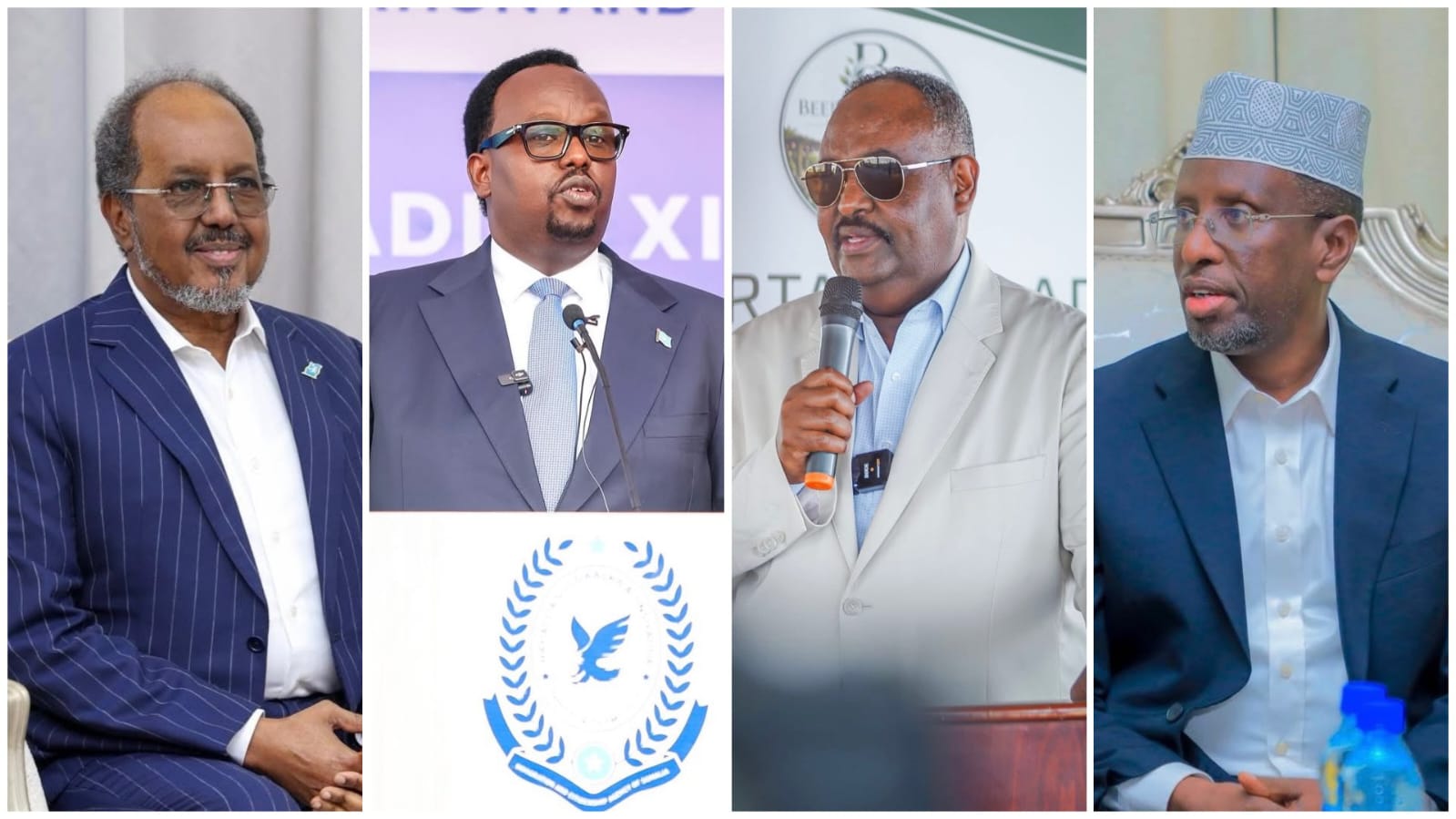
A crucial political meeting between the Somali Federal Government and opposition leaders ended on Wednesday without a final agreement after more than four hours of discussions held inside the heavily fortified Halane compound in Mogadishu, as both sides remained divided on key electoral and constitutional issues ahead of another round of talks expected tomorrow.
The meeting brought together Somali President Hassan Sheikh Mohamud and Deputy Prime Minister Salah Ahmed Jama representing the Federal Government, while the opposition delegation included former Somali President Sheikh Sharif Sheikh Ahmed and Puntland President Said Abdullahi Deni. Members of the international community were also present during the discussions.
Sources told Siyad Reports that the talks focused mainly on ongoing electoral disputes between the Federal Government and opposition leaders, constitutional disagreements, and politically linked detainees, but no agreement was reached after the lengthy meeting.
According to preliminary information from sources on both sides, the talks reached a deadlock on several major issues before leaders agreed to reconvene tomorrow for another round of negotiations. Separate consultations are ongoing tonight as each side attempts to prepare a unified position ahead of the next meeting.
During today’s discussions, the Federal Government reportedly attempted to narrow the scope of negotiations by pushing aside debates over constitutional amendments, regional state elections, territorial disputes, and term-related issues. Instead, the government proposed focusing discussions only on the type of federal election Somalia will hold, the election timeline, and the formation of an electoral committee.
Sources also indicated that diplomats from the United States and the United Kingdom encouraged both sides to focus on reaching a national election agreement rather than spending time on broader contentious political matters that could delay negotiations.
Although the opposition did not completely step away from the constitutional and political issues forming the basis of their position, they reportedly did not reject negotiations concerning the federal electoral process.
However, Puntland President Said Deni remained strongly focused on the constitutional issue, which sources described as the main political pressure point Puntland continues to use in its dispute with the Federal Government.
One of the major disagreements during the meeting reportedly emerged after President Hassan Sheikh proposed referring disputed matters to technical committees. According to sources familiar with the discussions, the proposal was viewed by opposition figures as a move that could prolong negotiations at a politically sensitive moment, especially with only two days remaining before the government reaches a key political deadline.
Members of the opposition reportedly rejected the proposal in its current form, arguing that Somalia’s political crisis requires direct political decisions rather than extended committee discussions.
Despite the disagreement, both sides later agreed to establish a joint technical committee, although tomorrow’s meeting is expected to determine the committee’s exact responsibilities and working framework.
Another major point of disagreement involved ongoing regional and local elections.
Reliable government sources confirmed that opposition leaders demanded the suspension of ongoing local council and regional elections, particularly the elections currently taking place in Southwest State.
According to sources, the opposition justified the demand by arguing that Somalia first requires broad political consensus before any electoral activities continue across the country.
The Federal Government strongly rejected the demand.
Government officials reportedly insisted that organizing regional state elections and local council elections remains part of the Federal Government’s constitutional responsibilities and made clear that Mogadishu’s local elections and the ongoing Southwest State electoral process would continue.
Today’s meeting, which began in what sources described as a calm atmosphere, was largely viewed as a preliminary session aimed at opening direct communication between both sides amid growing political tensions in Mogadishu.
What Happens Next?
Although no final agreement emerged from today’s discussions, political observers say the fact that both sides agreed to continue talks tomorrow is being viewed as an important step in preventing a deeper political confrontation.
The opposition is expected to holde a separate meetings tonight at Raas Hotel in Mogadishu to analyze the outcome of today’s talks and identify what they consider the main obstacles to progress, particularly regarding elections and concerns surrounding the government’s term ending on Friday.
Tomorrow’s meeting is expected to focus heavily on defining the role of the proposed joint technical committee and whether both sides can narrow their differences regarding federal elections and constitutional disputes.
The talks are taking place at a politically sensitive moment for Somalia as disagreements continue over the electoral process, constitutional amendments, and the broader direction of the country’s political transition.
While today’s meeting did not produce a breakthrough, sources from both sides acknowledged that some notable progress was made after both the government and opposition agreed to continue direct negotiations instead of abandoning the process entirely.
For now, attention remains focused on tomorrow’s second round of talks inside Halane, where both sides will face increasing pressure to either move closer toward compromise or risk deepening Somalia’s political uncertainty.