

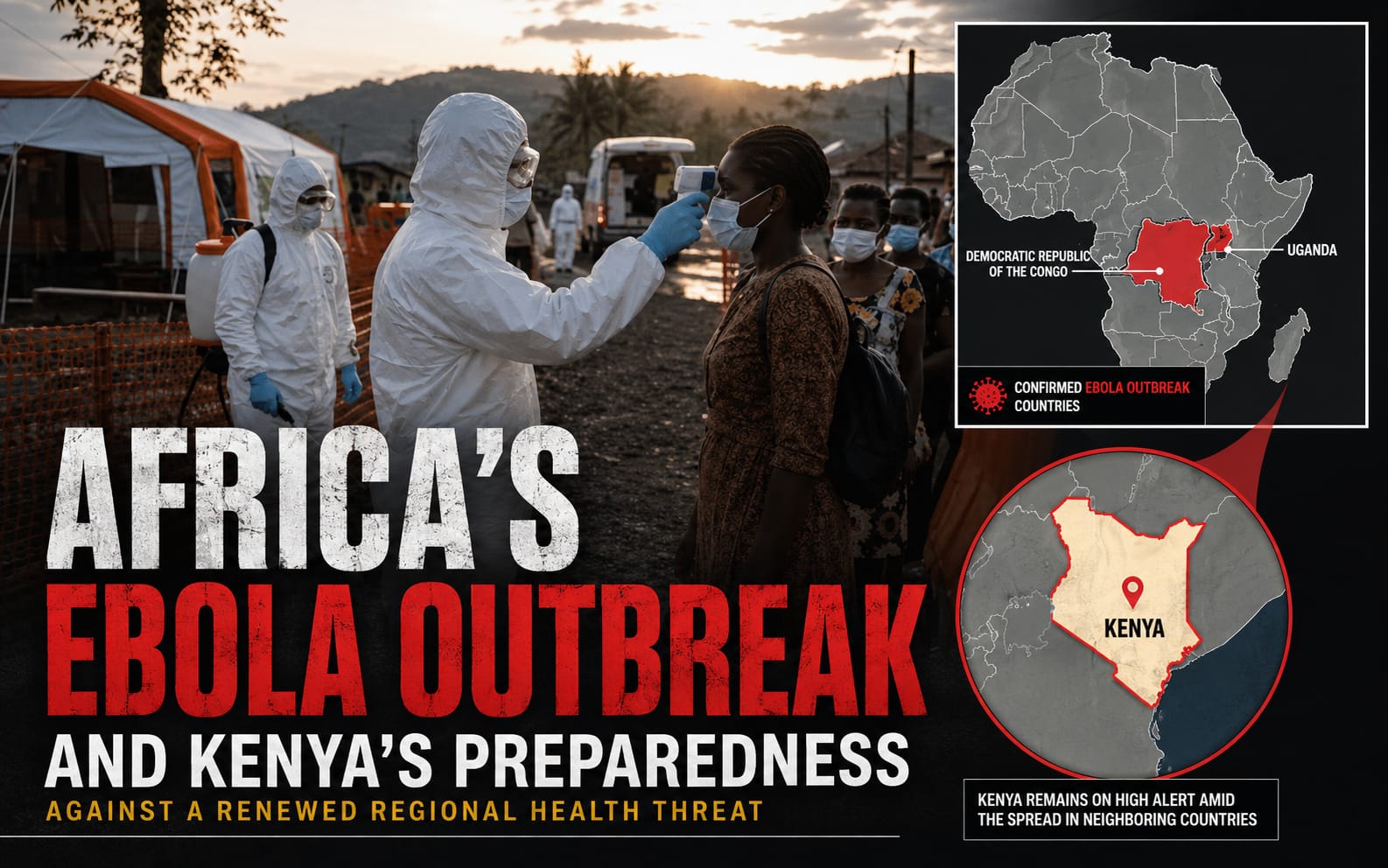
Africa is once again facing a frightening public health emergency after a fresh outbreak of Ebola virus disease spread rapidly across parts of Central and East Africa. The outbreak, centered in the Democratic Republic of the Congo (DRC) and now confirmed in Uganda, has already killed dozens of people, with hundreds of suspected infections reported within days. The World Health Organization (WHO) has officially declared the outbreak a Public Health Emergency of International Concern (PHEIC), raising fears of a wider regional crisis if containment efforts fail.
This latest outbreak is being caused by the rare Bundibugyo strain of the Ebola virus, first identified in Uganda in 2007. Unlike the more common Zaire Ebola strain, which has approved vaccines and treatments, the Bundibugyo variant currently has no licensed vaccine or specific therapeutic treatment. That reality has alarmed health authorities across Africa and beyond.
The outbreak reportedly began in eastern DR Congo, a region already struggling with armed conflict, displacement, poverty, and weak healthcare infrastructure. According to health experts, the virus spread silently for several weeks before being officially confirmed, allowing transmission chains to expand across communities and health facilities.
Healthcare workers were among the first victims, exposing weaknesses in infection prevention systems. The virus later spread toward urban areas and eventually crossed into neighboring Uganda, where new infections were confirmed, including fatalities.
The renewed outbreak has revived painful memories of previous Ebola epidemics that devastated African communities and overwhelmed fragile healthcare systems. Ebola remains one of the world’s deadliest viruses, spreading through direct contact with infected bodily fluids, contaminated surfaces, and unsafe burial practices. Symptoms often begin with fever, fatigue, headaches, and muscle pain before progressing into severe vomiting, diarrhea, internal bleeding, and organ failure in serious cases.
Why Ebola Continues Returning to Africa
One of the major questions surrounding every Ebola outbreak is why the disease keeps reappearing across Africa despite years of global health intervention.
Scientists believe Ebola is a zoonotic disease, meaning it originates in animals before spreading to humans. Fruit bats are considered the natural reservoir of the virus, while outbreaks often begin after human contact with infected wildlife in forested areas. In many rural regions, hunting bush meat and close interaction with wildlife increase the risk of transmission from animals to humans.
However, the return of Ebola is not only about nature. Deep structural challenges across parts of Africa continue creating conditions that allow outbreaks to emerge and spread rapidly.
Many outbreak-prone areas suffer from weak healthcare systems, underfunded laboratories, delayed disease surveillance, insecurity, and limited public awareness. In conflict-hit regions such as eastern Congo, health officials often struggle to access affected communities due to armed violence and instability. This delays detection and makes contact tracing extremely difficult.
Population movement is another major factor. Eastern Congo connects several East African countries through trade and migration routes. Traders, refugees, truck drivers, and travelers move across borders daily, increasing the risk of regional spread.
Environmental destruction may also play a role. Deforestation and human expansion into wildlife habitats are increasing contact between humans and disease-carrying animals. Public health experts have repeatedly warned that climate and environmental pressures may contribute to more frequent outbreaks in the future.
The Bundibugyo strain itself has created additional concern because there are currently no fully approved vaccines specifically designed for it. While some experimental treatments are being explored, health authorities are relying heavily on traditional outbreak control methods such as isolation, contact tracing, border surveillance, community awareness campaigns, and protective equipment for healthcare workers.
Despite these fears, Africa today is better prepared than during the devastating West African Ebola epidemic of 2014–2016. Countries like Uganda have developed stronger outbreak response systems after battling multiple Ebola waves over the years. Emergency response teams, laboratory testing networks, and surveillance systems have significantly improved compared to previous decades.
Still, experts warn that preparedness remains uneven across the continent. Many healthcare systems continue depending heavily on donor funding and international support. In poorer or conflict-affected regions, medical infrastructure remains fragile and vulnerable to collapse during large outbreaks.
Kenya’s Preparedness Amid the Regional Threat
For Kenya, the Ebola outbreak presents a serious regional security and public health concern even though no confirmed cases have currently been reported in the country.
Kenya’s position as a transport, trade, and travel hub in East Africa places it at potential risk of imported infections, especially because of its strong connections with Uganda and other neighboring countries. Daily movement through airports, border crossings, and regional transport routes increases the possibility of cross-border transmission if surveillance systems fail.
In previous Ebola alerts, Kenya activated screening systems at major entry points including Jomo Kenyatta International Airport (JKIA), border posts, and referral hospitals. Health authorities are expected to strengthen similar measures again following the WHO emergency declaration.
The Ministry of Health is likely to intensify disease surveillance, emergency response coordination, laboratory testing, and isolation preparedness across counties. Hospitals may also increase monitoring of travelers arriving from affected regions, especially individuals showing symptoms such as fever, vomiting, unexplained bleeding, or severe weakness.
Kenya’s experience during the COVID-19 pandemic may also provide an advantage. The country strengthened emergency coordination systems, public communication structures, and disease response networks during the pandemic years. Those systems could now help authorities respond faster in the event of an Ebola threat.
However, challenges still remain. Kenya’s healthcare system continues facing shortages in staffing, funding, equipment, and rural healthcare access. Border management and public awareness campaigns will also be critical in preventing panic and misinformation if the outbreak escalates further within the region.
Ultimately, Kenya’s greatest defense may be early preparedness rather than late reaction. Health experts say rapid detection, transparent communication, regional cooperation, and strong public trust will be essential in preventing Ebola from crossing deeper into East Africa.
The renewed Ebola outbreak is a reminder that infectious diseases remain one of the biggest threats facing Africa’s future. While the continent has made progress in outbreak response and emergency preparedness, recurring epidemics continue exposing the deep inequalities and weaknesses within many healthcare systems.
Whether this outbreak is quickly contained or evolves into a wider regional crisis will depend on speed, cooperation, scientific response, and the willingness of governments to act decisively before the virus spreads further.