

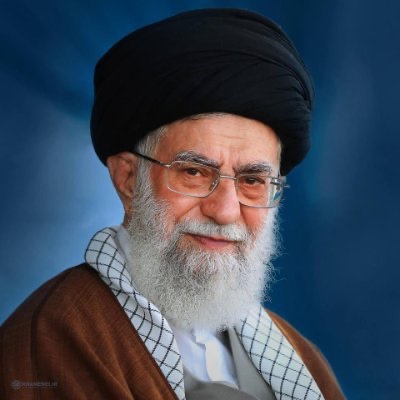
The death of Iran’s Supreme Leader, Ali Khamenei, has been confirmed by Iranian state television and major state-aligned media outlets. The announcement has triggered nationwide mourning, with Iran declaring 40 days of mourning and seven days of public holiday in honor of the leader who ruled the Islamic Republic for 36 years.
Khamenei’s death marks one of the most significant geopolitical shocks in modern Middle Eastern history. As the second Supreme Leader of Iran, he was not simply a political figure but the central architect of Iran’s ideological, military, and foreign policy direction since 1989.
The news emerged following military strikes reportedly carried out by the United States and Israel on strategic targets in Tehran. Both Washington and Israeli sources had earlier claimed that the operation resulted in the death of Khamenei and other senior Iranian officials.
The confirmation of his death has now pushed Iran into a period of political uncertainty and strategic danger.
Iran’s television network Press TV has warned that the world should expect shocking developments in the coming hours as the country prepares its response.
Meanwhile, the Islamic Revolutionary Guard Corps has issued a statement promising severe retaliation against those responsible for the killing of their national and religious leader.
The IRGC’s response is particularly important because it is not only a military institution but also one of the most powerful political and economic forces inside Iran.
The death of Khamenei is therefore not just a leadership change it is the opening of a new and extremely volatile chapter in Iranian and regional politics.
The Power Vacuum and Succession Battle Inside Iran
Unlike many political systems, the Islamic Republic of Iran is structured around the concept of supreme religious authority. The Supreme Leader is the highest decision-maker in the country, controlling the military, foreign policy, judiciary, and major state institutions.
The Iranian Constitution provides a mechanism to avoid a complete leadership vacuum.
If the Supreme Leader dies, authority is temporarily transferred to a Leadership Council composed of the President, the Head of the Judiciary, and a clerical member of the Guardian Council. This arrangement is designed purely for transitional administration rather than long-term governance.
The real political power in choosing the next leader belongs to the Assembly of Experts, an elected but religiously oriented body responsible for selecting the Supreme Leader.
Historically, succession has been rapid.
When Iran’s revolutionary founder Ruhollah Khomeini died in 1989, the Assembly of Experts selected Khamenei as the new leader within hours. That precedent suggests that Iran’s current leadership will likely move quickly to prevent political fragmentation.
However, the 2026 situation is fundamentally different from 1989.
At the time of Khomeini’s death, the Islamic Republic was still consolidating its revolutionary institutions. Today, Iran is a regional military power facing external pressure, internal social unrest, and
economic sanctions.
The succession question is therefore not only constitutional but also strategic.
Who May Replace Khamenei?
Iranian political circles have long discussed potential succession candidates, although no official public list exists.
The most influential variable will be the role of the Revolutionary Guard establishment.
Some analysts believe the next Supreme Leader could emerge from a security-aligned hardline faction rather than traditional clerical hierarchy.
If the IRGC becomes the primary political kingmaker, Iran could move toward a more militarized ideological governance model.
Such a shift would not necessarily change Iran’s strategic doctrine but could intensify its operational aggressiveness.
The earlier intelligence assessments suggesting that hardline IRGC elements could dominate succession now appear highly relevant.
The Islamic Republic has always balanced between clerical authority and revolutionary military power. Khamenei personally managed that balance for decades.
His absence may destabilize the equilibrium.
Retaliation Risk and Regional Escalation
The most immediate concern following Khamenei’s death is Iran’s response.
The IRGC statement promising revenge reflects a historical pattern in Iranian strategic culture.
Iran typically responds to major security shocks through asymmetric warfare rather than direct conventional confrontation.
Possible retaliatory mechanisms include:
Missile or drone strikes against Israeli territory
Cyberattacks targeting infrastructure in hostile states
Activation of allied regional networks
Maritime disruption in strategic waterways such as the Gulf shipping routes
The geopolitical importance of the region cannot be overstated.
International energy markets are highly sensitive to instability around Middle Eastern maritime corridors. Any escalation that threatens oil transportation could trigger global economic shockwaves.
The United States and Israel must now prepare for multi-front risk scenarios.
Iran’s military strategy historically favors gradual pressure rather than immediate full-scale war. However, leadership decapitation attacks often produce unpredictable emotional and political reactions inside revolutionary states.
The statement from Press TV that the world will be shocked should be interpreted as psychological signaling as much as military warning.
It is designed to maintain deterrence by creating uncertainty about Iran’s next move.
Iran’s Future: Between Hardline Consolidation and Institutional Survival
Khamenei ruled Iran for nearly four decades, longer than many contemporary political leaders in modern history.
During his rule, he consolidated authority over:
The armed forces
The IRGC command structure
Foreign policy institutions
Judicial appointments
Electoral candidate vetting mechanisms
His leadership style combined ideological rigidity with strategic pragmatism.
On the international stage, Iran under Khamenei pursued a confrontational relationship with the United States and Israel while expanding regional influence through alliances and proxy networks.
The Iranian nuclear program also advanced significantly during his tenure.
Although he frequently stated that nuclear weapons were religiously forbidden in Islam, Western intelligence agencies and regional governments continued to express concern about Iran’s enrichment capabilities.
Domestically, Khamenei’s government faced repeated social unrest.
The 2022 protests triggered by the death of Mahsa Amini became one of the largest internal challenges to the Islamic Republic in decades. The government responded with strong security measures, reflecting its priority of regime stability over political liberalization.
His death could produce two competing internal reactions.
Hardline factions may attempt to strengthen ideological control and use the crisis to unify the population around a revenge narrative.
Conversely, reform-leaning or moderate political groups may see the transition period as an opportunity to push for institutional adjustments.
The outcome will depend largely on how quickly succession is resolved.
The Global Geopolitical Impact
The death of Iran’s Supreme Leader will reverberate far beyond the Middle East.
Energy security is one of the most immediate concerns.
Iran sits near strategic maritime routes through which a significant portion of global oil shipments pass. If tensions escalate, shipping companies and insurance markets may adjust operations, potentially driving up global oil prices.
Major world powers will now monitor Tehran’s political stability.
China and Russia have maintained complex strategic relationships with Iran, viewing it as an important geopolitical partner in counterbalancing Western influence in parts of Eurasia.
The United States faces a delicate strategic calculation.
Further military escalation could expand the conflict across multiple theaters. However, allowing Iran to retaliate without response could also weaken deterrence credibility.
Israel’s security doctrine is also entering a critical phase.
Israeli leadership has long viewed Iran’s regional influence and nuclear ambitions as primary strategic threats.
The removal of Khamenei may be interpreted in Israel as a historic opportunity to reshape regional power dynamics.
The Road Ahead: Uncertainty Defines the Moment
Iran is now entering what may become the most important transition period in its post-revolutionary history.
The coming days will reveal whether the Islamic Republic can maintain internal unity or whether elite competition will emerge behind the scenes.
Three major outcomes remain possible:
A controlled succession with limited regional escalation;
IRGC-driven hardline consolidation of power;
Or prolonged internal political instability.
What is certain is that the death of Ali Khamenei removes the central figure who maintained ideological and strategic continuity inside Iran for more than three decades.
The Islamic Republic was built on the idea of revolutionary permanence.
The question now facing Tehran is whether that permanence can survive the loss of its most powerful guardian.
The world is watching.
And the next move from Iran may determine whether this moment becomes a controlled political transition or the beginning of a far wider confrontation in the Middle East.