

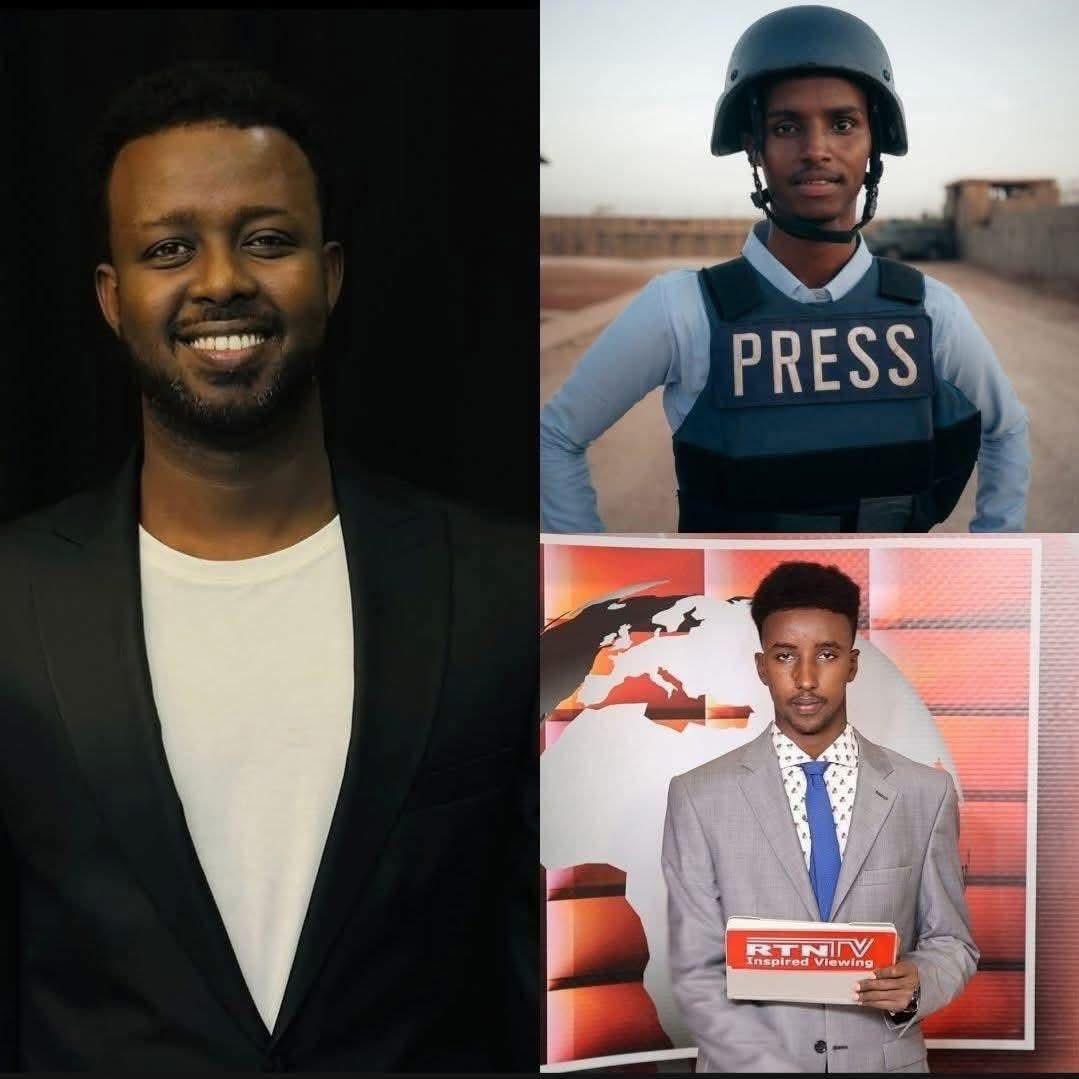
In a country where political tensions, insecurity, and power struggles dominate national discourse, the recent detention of three Somali journalists in Mogadishu has once again ignited debate about the fragile state of press freedom in Somalia. The arrests of Abdishakur Mohamed Mahmoud, Mohamed Ibrahim Bulbul, and Abdihafid Nur Barre have sparked outrage among media rights defenders, civil society groups, and sections of the international community.
Yet beyond the immediate headlines lies a more complex and uncomfortable reality one that involves not only government pressure on journalists, but also growing concerns about political activism disguised as journalism, opposition influence within sections of civil society, and the increasingly polarized nature of Somalia’s public discourse.
The arrests reportedly came amid rising criticism directed at the Somali government over forced evictions, public protests, governance failures, and human rights concerns. Attention particularly focused on journalist Mohamed Ibrahim Bulbul following his widely shared reporting with The Guardian on the detention of activist Sadia Moalim Ali. To many observers, the timing of the arrests suggested retaliation against critical reporting. To others, however, the situation also reflects a broader challenge facing Somalia today: the increasingly blurred lines between journalism, activism, and political opposition.
This debate has become one of the most sensitive issues in modern Somali politics. Somalia’s constitution guarantees freedom of expression and media freedom, at least in principle. Journalists are expected to investigate corruption, question leaders, expose abuses, and inform the public. But the political climate in Somalia is deeply fragile, and tensions often escalate quickly. In such an environment, criticism directed at the government can sometimes be interpreted not merely as journalism, but as political mobilization.
That distinction matters because Somalia is not an ordinary stable democracy. The country continues to battle the insurgency of Al-Shabaab, while simultaneously facing constitutional disputes, clan rivalries, economic struggles, regional tensions, and fierce political competition. Government officials argue that misinformation, politically motivated narratives, and inflammatory reporting can easily destabilize an already fragile society.
Some Somali authorities and supporters of the government increasingly believe that sections of the media landscape are no longer functioning purely as neutral watchdogs, but as political actors aligned with opposition interests. They argue that certain journalists, online commentators, and activists selectively target the government while ignoring abuses or failures committed by opposition figures or regional administrations.
This argument has gained traction particularly on social media, where Somali political debates have become highly polarized. Journalists who criticize the government are often accused by government supporters of serving opposition agendas. At the same time, journalists defending government policies are accused by critics of acting as state propagandists. The result is a deeply divided information environment where trust in neutrality continues to erode.
There is some truth to these concerns. In Somalia, as in many politically divided countries, journalism sometimes crosses into open activism. Some reporters increasingly use emotionally charged language, direct political attacks, and partisan framing that blur professional boundaries. Rather than merely presenting facts and allowing the public to draw conclusions, certain journalists openly position themselves within political battles.
This trend is not unique to Somalia. Across the world, digital media and political polarization have transformed journalism itself. Social media rewards outrage, confrontation, and sensationalism. Neutral reporting often struggles to gain the same attention as emotionally charged criticism. In Somalia’s fragile political environment, this dynamic becomes even more dangerous.
Critics of Somali media argue that some journalists have abandoned professional ethics such as balance, verification, and fairness. Instead of reporting events objectively, they say, some media personalities actively shape political narratives designed to weaken specific leaders or institutions. In certain cases, allegations have emerged that sections of civil society and activist networks receive backing from opposition figures seeking to influence public opinion against the federal government.
Indeed, Somalia’s political landscape has long involved alliances between politicians, business interests, activists, and media actors. Opposition politicians frequently rely on sympathetic journalists and civil society voices to amplify criticism against the government. Likewise, governments themselves often cultivate relationships with supportive media outlets and commentators to defend their policies and attack opponents.
This reality creates a difficult challenge for Somali society. Genuine journalism is essential for democracy, but political manipulation of media spaces can also undermine national stability. Distinguishing between legitimate investigative reporting and politically motivated campaigns is not always easy, especially in an atmosphere of mistrust and intense political competition.
However, acknowledging these concerns does not justify arbitrary arrests or intimidation of journalists. Governments in democratic societies are expected to respond to criticism through transparency, evidence, legal accountability, and public engagement — not through detentions that risk creating fear within the media sector. Arresting journalists because authorities dislike their reporting only deepens suspicions that the state seeks to silence dissent.
The danger lies in overreaction. Once governments begin broadly labeling critical journalism as political sabotage, press freedom quickly deteriorates. Authorities may start targeting not only openly partisan actors but also independent journalists simply investigating sensitive issues. Fear spreads across newsrooms. Reporters begin avoiding controversial topics. Self-censorship becomes normalized.
Somalia has experienced this pattern before. Over the years, journalists have faced arrests, threats, harassment, and violence from multiple actors including extremist groups, clan militias, regional administrations, and federal authorities. Somalia consistently ranks among the world’s most dangerous countries for journalists. Many reporters work under constant pressure, knowing that one investigation or one article could place their lives at risk.
At the same time, governments also face genuine frustrations with misinformation and politically driven media campaigns. Somalia’s online space is flooded daily with unverified allegations, manipulated narratives, clan propaganda, and disinformation. Politicians and activists often weaponize social media to inflame tensions or attack rivals. False reports can spread rapidly, creating panic and political instability.
This creates a major dilemma for Somali authorities. On one hand, governments have a legitimate responsibility to protect national security and maintain public order. On the other hand, excessive crackdowns on media risk undermining democratic credibility and violating constitutional freedoms.
The solution cannot simply be unrestricted chaos or heavy-handed repression. Somalia instead requires stronger professional journalism standards alongside stronger institutional protections for press freedom. Journalists must uphold ethical reporting, verify information carefully, avoid deliberate incitement, and separate factual reporting from political activism. Governments, meanwhile, must tolerate criticism, protect journalists’ rights, and avoid using security institutions to suppress unfavorable coverage.
A healthy democracy requires both responsible journalism and responsible governance.
Unfortunately, Somalia’s political culture often pushes both sides toward confrontation rather than accountability. Politicians frequently treat criticism as betrayal. Journalists sometimes frame every government action through partisan lenses. Activists occasionally become deeply entangled in political struggles. Public trust erodes as every actor accuses the other of manipulation.
The recent arrests in Mogadishu therefore represent more than just a legal dispute involving three journalists. They expose the broader crisis of trust consuming Somalia’s political and media landscape. The government fears destabilization and political attacks disguised as journalism. Journalists fear repression and shrinking civic space. Citizens are left struggling to distinguish between objective reporting, propaganda, and political campaigning.
The forced eviction issue illustrates this complexity clearly. Journalists reporting on displaced communities perform an important public service by exposing humanitarian suffering and demanding accountability. But authorities sometimes argue that selective reporting ignores broader security or urban planning challenges facing the government. Opposition politicians may also exploit humanitarian crises to attack the administration politically.
Similarly, civil society activism plays an essential role in defending rights and amplifying marginalized voices. Yet Somali politics has also seen instances where activist movements become closely aligned with opposition agendas. Some government supporters argue that certain NGOs, activists, and online campaigns operate less as neutral human rights advocates and more as political pressure tools targeting state institutions.
Whether these accusations are fully justified or not, they reflect growing political polarization in Somalia. Nearly every issue today becomes interpreted through political loyalties rather than objective debate. Even discussions about human rights or press freedom quickly divide into competing political camps.
This polarization is dangerous because it weakens national cohesion at a time when Somalia urgently needs institutional stability. The country remains in a sensitive transitional phase, balancing security operations against Al-Shabaab, constitutional reforms, federal-state negotiations, economic recovery, and preparations for future political transitions.
In such an environment, both government and media carry enormous responsibilities.
The Somali government must understand that press freedom is not a threat to national stability but a pillar of democratic legitimacy. Silencing journalists damages Somalia’s international image, weakens public trust, and fuels perceptions of authoritarianism. Strong governments do not fear scrutiny; they answer it confidently through facts and transparency.
At the same time, Somali journalists and activists must also reflect seriously on the ethical responsibilities attached to their influence. Journalism should not become indistinguishable from political mobilization. Reporters must avoid sensationalism, incitement, selective outrage, and unverified accusations that inflame tensions in an already fragile society. The credibility of Somali media depends heavily on maintaining professional independence and public trust.
Civil society organizations also face an important test. Genuine advocacy for rights and freedoms is essential in Somalia’s democratic development. But when activist spaces become openly tied to political interests, public confidence in civil society weakens. Advocacy loses moral authority when perceived as partisan warfare rather than principled defense of rights.
Ultimately, Somalia’s future depends on finding a balance between security, political stability, accountability, and freedom of expression. None of these goals can survive in isolation. A government without accountability risks authoritarianism. A media landscape without professionalism risks chaos and manipulation. A society without civic freedoms risks fear and silence.
The arrests of Abdishakur Mohamed Mahmoud, Mohamed Ibrahim Bulbul, and Abdihafid Nur Barre have therefore become symbolic of a much larger national struggle. Somalia is wrestling not only with the question of press freedom, but with a deeper question about the nature of democracy itself in a fragile post-conflict state.
Can Somalia create a political culture where journalists criticize responsibly without fear of arrest? Can governments tolerate scrutiny without viewing every critic as an enemy? Can civil society defend rights without becoming trapped in partisan battles? Can political actors stop weaponizing media and activism for short-term power struggles?
These are difficult questions with no easy answers.
But one reality remains clear: Somalia cannot build strong democratic institutions while fear dominates the relationship between the state and the press. Nor can it build national unity if journalism itself becomes consumed entirely by political polarization and partisan conflict.
The challenge ahead is not simply protecting journalists or defending governments. The real challenge is building a mature democratic culture where truth, accountability, professionalism, and national stability can coexist.
That remains one of Somalia’s greatest unfinished battles.