

After weeks of public debate, political criticism, and widespread speculation, President William Ruto has finally responded to concerns surrounding Kenya’s decision to host an Ebola preparedness and response facility at Laikipia Air Base.
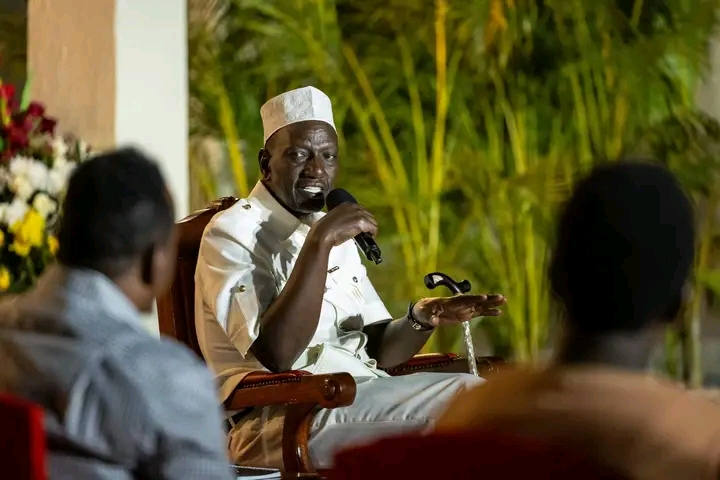
Speaking during the North Eastern Media Roundtable shortly after the Madaraka Day celebrations in Wajir County, the President defended the government’s decision, arguing that the arrangement is rooted in Kenya’s long-standing partnership with the United States and is intended to strengthen the country’s capacity to respond to future health emergencies.
The issue first gained national attention after reports emerged that Kenya had agreed to host a facility linked to Ebola preparedness at the Laikipia Air Base. The revelation triggered a heated public debate, with some Kenyans expressing fears that the country could become a destination for dangerous infectious diseases. Critics questioned the rationale behind the agreement and demanded greater transparency from the government regarding its objectives, safety measures, and potential implications for public health.
Opposition leaders, civil society groups, and a section of the public raised concerns about whether Kenya was exposing itself to unnecessary risks by accepting such a facility. Others questioned why the project was being hosted in Kenya and whether the country had been adequately consulted before the agreement was reached.
Until now, the government had largely remained silent on the controversy, allowing speculation and misinformation to flourish across social media platforms and public discourse. President Ruto’s remarks in Wajir therefore marked the first detailed response from the Head of State on a matter that has generated significant national interest.
Addressing journalists, President Ruto revealed that the initiative stemmed from a direct request by the United States government and was part of an existing framework of cooperation between the two countries.
“When President Donald Trump asked the government of Kenya to support them by establishing a centre at Laikipia Air Base, I gave the go-ahead because it was part of an agreement and partnership with friends who have worked with Kenya for 30 to 40 years. The American government has supported us and deployed significant resources in Kenya,” President Ruto said.
The President framed the decision not as a foreign project imposed on Kenya, but as a collaborative effort between two longstanding partners. His remarks sought to reassure the public that the facility is intended to enhance preparedness rather than introduce health risks into the country.
Ruto emphasized that Kenya’s relationship with the United States has yielded substantial benefits over several decades, including support in healthcare, security, economic development, education, and humanitarian interventions. According to the President, the agreement should therefore be viewed within the broader context of strategic cooperation between Nairobi and Washington.
He further explained that the facility is designed to build Kenya’s capacity to detect, manage, and respond to disease outbreaks should they occur in the future.
“What the American government is doing is to work with us in partnership to build the capacity to make sure that if ever we needed a facility, that facility will be there to serve the people of Kenya and to serve our friends, including the Americans,” the President stated.
The comments suggest that the facility’s primary objective is preparedness and emergency response rather than the treatment or transfer of Ebola patients from other countries. By focusing on capacity building, Ruto appeared keen to dispel fears that Kenya could become a testing ground or storage site for infectious diseases.
His response also highlights a growing global emphasis on pandemic preparedness in the aftermath of the COVID-19 crisis. Governments around the world have increasingly invested in surveillance systems, laboratory infrastructure, emergency response centres, and cross-border health cooperation to prevent future outbreaks from escalating into global emergencies.
For Kenya, the establishment of such a facility could potentially strengthen national health security by improving research capabilities, emergency response mechanisms, and coordination with international partners. Supporters of the initiative argue that investments in preparedness are essential in a region that remains vulnerable to outbreaks of infectious diseases.
However, despite the President’s assurances, questions are likely to remain regarding the details of the agreement, operational safeguards, and the extent of public participation in the decision-making process. Public concern has largely been driven by limited information about the facility, making transparency a key factor in building trust and confidence.
Political analysts note that Ruto’s decision to address the matter personally reflects the level of public interest it has generated. By linking the project to Kenya’s broader diplomatic and strategic partnership with the United States, the President sought to shift the conversation from fear and speculation toward cooperation and preparedness.
The Head of State said Kenya currently operates more than 20 specialised health facilities across the country, including Kenyatta National Hospital, the Police Hospital in Nairobi, Moi Teaching and Referral Hospital in Eldoret, Thika, and Alupe Hospital in Busia, among others.
“These facilities are meant to make sure that there is proper screening and, if there is any positive identification of people who have Ebola, then immediately they are isolated and treated so that we avoid any spread of the disease,” he said.
Ruto also defended Kenya’s regional health security posture, noting the country’s involvement in supporting stability and humanitarian needs in neighbouring states, including the Democratic Republic of Congo, where Kenyan personnel and civilians could be exposed to infectious disease risks.
He argued that preparedness was not optional given the interconnected nature of regional movement and health threats.
“The fact that we could end up with a case is not far-fetched,” he said.
The President dismissed criticism of the government’s approach as political interference in a public health matter.
“We are a responsible government. We know what we are doing. People should relax. Politicians should avoid reckless, unnecessary talk that doesn’t mean anything,” he said.
For now, President Ruto’s position is clear: Kenya’s involvement in the Ebola preparedness facility is not a threat to the country but an investment in future health security. As debate continues, the government’s challenge will be convincing skeptical citizens that the project serves Kenya’s national interests while maintaining the highest standards of safety, accountability, and transparency.
With his Wajir remarks, the President has provided the strongest defense yet of the controversial agreement, framing it as a product of decades of friendship between Kenya and the United States and a strategic step toward ensuring that the country is prepared for whatever public health challenges the future may bring.