

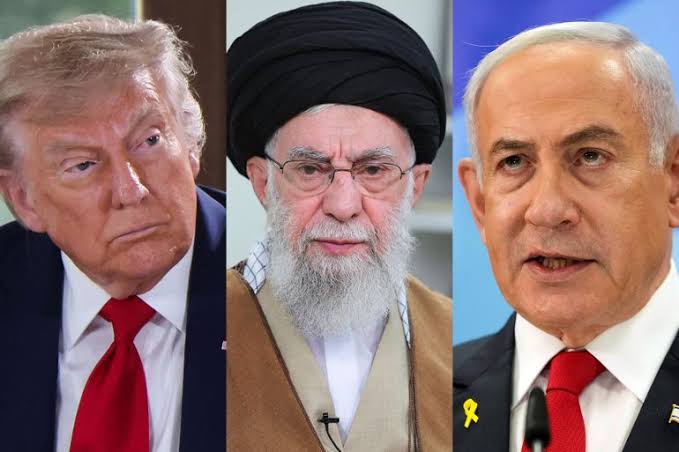
There are rare inflection points in history where the world seems to teeter on the brink, where political miscalculations and forceful strikes spiral beyond control, and where the global economy and security architecture feel suddenly fragile and precarious.
What the world is now witnessing in the Middle East is one such moment a war that has escaped any meaningful containment, that has rapidly transformed from a regional contest into a confrontation with global stakes, and one in which the very arteries of global trade are being squeezed.
At the center of this storm is Iran but this is not the Iran of rhetorical posturing or simply symbolic threats. This is a state that feels besieged, cornered, and willing to wager everything on deterrence by escalation. For much of the last decade, U.S.–Iran tensions simmered at a dangerous boil, punctuated by proxy skirmishes and repeated warnings about nuclear ambitions.
But never before has Tehran confronted direct, coordinated military strikes by the United States and Israel on its own territory, targeting leadership and strategic assets. Those strikes, carried out on February 28 and early March 1, 2026, have ignited a wider conflict with implications that now extend far beyond the Middle East.
Iran’s response has been swift and unrestrained. From launching missile and drone attacks against bases linked to U.S. forces across the region, to striking at Gulf capitals linked to U.S. and Israeli influence, Tehran has signaled that its doctrine in this conflict is not survival alone but mutual destruction: “If I can’t survive peacefully, then all will suffer.” That stance, echoed by Iran’s allies and interpreted by military analysts as a strategic departure from previous restraint, has fundamentally altered the character of this war.
This is not Venezuela, and Supreme Leader Ali Khamenei was never Nicolás Maduro. Iran’s structure of governance, its regional networks of influence, its military capabilities, and its historical memory of foreign intervention make it a far more formidable opponent.
When Abdiwahab Sheikh Abdisamad, a Horn of Africa analyst, observes that the best course now is immediate de-escalation and an end to this war, he is not simply expressing a moral plea he is acknowledging the strategic reality that a wider conflagration benefits no sane actor and risks catastrophic global fallout.
Yet, it appears that neither side believes it can back down without losing face or strategic leverage. On the American and Israeli side, there are indications especially among military experts that the initial strikes were based on miscalculations about Iran’s resilience and the likely intensity of retaliation. Where some U.S. planning may have assumed a limited, containable conflict, events have unfolded in multiple directions: the Strait of Hormuz, the Red Sea, the Gulf of Oman, and even across the Arabian Peninsula. The U.S. and Israel now face the uncomfortable reality that their actions triggered not just a blowback but a cascading escalation that neither government seems fully prepared to manage.
The most powerful symbol of this escalation is the Strait of Hormuz a narrow waterway, just 33 kilometers across at its most constricted point, through which almost 20% of the world’s seaborne oil and gas moves every day. What was once a strategically sensitive chokepoint has become a battleground. Ships have been warned away.
Commercial carriers have suspended transits. Iran’s naval broadcasts have produced conditions tantamount to closure and even if not formally declared “closed,” the practical effect is the same: global oil flows have slowed to a trickle.
It is worth emphasizing what that means on the ground and in the markets. Global energy markets thrive on predictability; even the threat of disruption can send prices rocketing. Within hours of these escalations, oil futures spiked sharply, testing levels not seen in years and threatening inflationary pressures that ripple far beyond energy sectors. A sustained disruption in the flow of crude and LNG would not only hit producers but also consumers from East Asia to Europe and the United States forcing central banks, governments, and corporations into crisis management mode.
The International Energy Administration estimates that tens of millions of barrels of crude pass through Hormuz daily; even a short disruption could cause oil prices to surge beyond historic averages and exacerbate geopolitical tensions around the world.
But the economic implications are only one piece of the picture. The psychological and strategic dimension of closing or threatening to close Hormuz cannot be overstated. For Iran, this is a demonstration of leverage. Tehran believes that by threatening global energy security, it can force external powers especially those in Europe and Asia to push for de-escalation.
For the United States and its allies, allowing a hostile power to choke global trade routes undermines decades of naval strategy and invites what naval thinkers call freedom of navigation challenges. In a sense, both sides are playing a high-stakes poker game with the world’s energy security as the pot. The difference now is that the chips are real lives, livelihoods, and sovereign stability.
Adding to the volatility is the Red Sea theatre, where Yemen’s Houthi forces allies of Iran have dramatically intensified attacks on commercial shipping. For months, they have targeted vessels in and around Bab el-Mandeb, effectively disrupting the Suez Canal corridor.
Some shipping companies have been forced to detour around the Cape of Good Hope, adding significant time and cost to global trade routes. In such circumstances, the idea of rerouting oil around multiple long maritime pathways has gone from theoretical to urgent for energy traders. Yet each alternate route adds cost, friction, and time imposing a hidden tax on the global economy.
The United States and Israel now confront the stark reality that their military campaign has unleashed a regional conflagration extending far beyond their original targets.
Military experts have begun to publicly assess that the initial strikes underestimated Iran’s ability to retaliate strategically, underestimated the willingness of allied militia groups to expand the conflict, and underestimated the economic consequences of destabilising critical trade routes. There are voices within strategic circles suggesting that this may be a moment of regret for decision-makers who failed to appreciate the fragile balance of deterrence in the Middle East.
To paraphrase key analysts, the war now unfolding is less about victory and more about containment of damage
something neither side seems to have prepared adequately for.
In debating whether the United States and Israel regret their decision to launch this campaign, one must distinguish between regret as emotional reflection and regret as strategic reassessment. Publicly, both governments will never admit to regret; they will frame their actions as necessary to prevent a future in which Iran develops nuclear weapons or gains uncontested regional dominance.
Behind closed doors, however, military and policy experts are whispering that miscalculation has brought the world dangerously close to widescale conflict, one that could engulf other states, draw in major powers, and create divisions among U.S. allies.
Diplomatically, the world is already reacting. At the United Nations Security Council, fierce confrontations have erupted between U.S. and Iranian representatives, while Russia, China, and European states call for restraint and a return to negotiation.
Such divisions foreshadow a fragmented response to the crisis a global system struggling to reconcile powerful national interests with the urgent need to prevent wider war.
And what of the regional powers those Arab states whose soil and economies lie directly in the line of fire? From the Gulf monarchies to smaller states, there is a palpable fear that they are being dragged into a conflict not of their choosing. While some had quietly supported punitive measures against Iran’s nuclear ambitions, none foresaw a full-blown war that threatens their economic lifelines and internal security.
The fear now is that national priorities are being upended by forces far beyond their control, and that their very borders may become battlefields.
In the final assessment, this war is not just a military conflict; it is a strategic rupture. It has revealed the fragility of global energy systems, the dangers of miscalculation in high-stakes geopolitics, and the deep human cost of escalatory logic.
It has shown that in today’s interconnected world, an act in Tehran, Jerusalem, or Washington can ripple across continents, disrupt markets, strain alliances, and raise the spectre of conflict far greater than any immediate battlefield.
What the world now desperately needs though it is not clear if it can still be achieved is de-escalation rooted in diplomacy, not coercion; negotiation framed by mutual security interests, not existential threats; and leadership that understands that no one wins a war that collapses trade routes, devastates economies, and erodes global stability.
The clock is ticking. The next moves on this board will determine whether this war contracts or expands into something far darker. The hope of peace remains distant, but to abandon it would be to accept global turmoil as inevitable a future too grim to contemplate.