

MOGADISHU, Somalia — Somalia has formally entered a new chapter in its state-building journey following the official completion and enactment of the country’s permanent Constitution, a milestone hailed by national leaders as the definitive end of the long-standing provisional era.
In a historic move, the Federal Parliament overwhelmingly approved the revised constitutional chapters after years of review, consultation, and debate. The vote marked the culmination of an extensive national process that examined and amended key provisions across the Constitution, laying what leaders describe as a firm legal foundation for governance, federalism, and democratic development.
President Dr. Hassan Sheikh Mohamud and Prime Minister Hamza Abdi Barre led nationwide reactions, congratulating lawmakers and the Somali people for what they called a decisive turning point in Somalia’s political history.
For more than a decade, Somalia operated under a provisional constitutional framework a temporary arrangement designed to guide governance while the country emerged from conflict and institutional collapse. The completion of the constitutional review process now signals what leaders say is a permanent transition into a stable constitutional order.
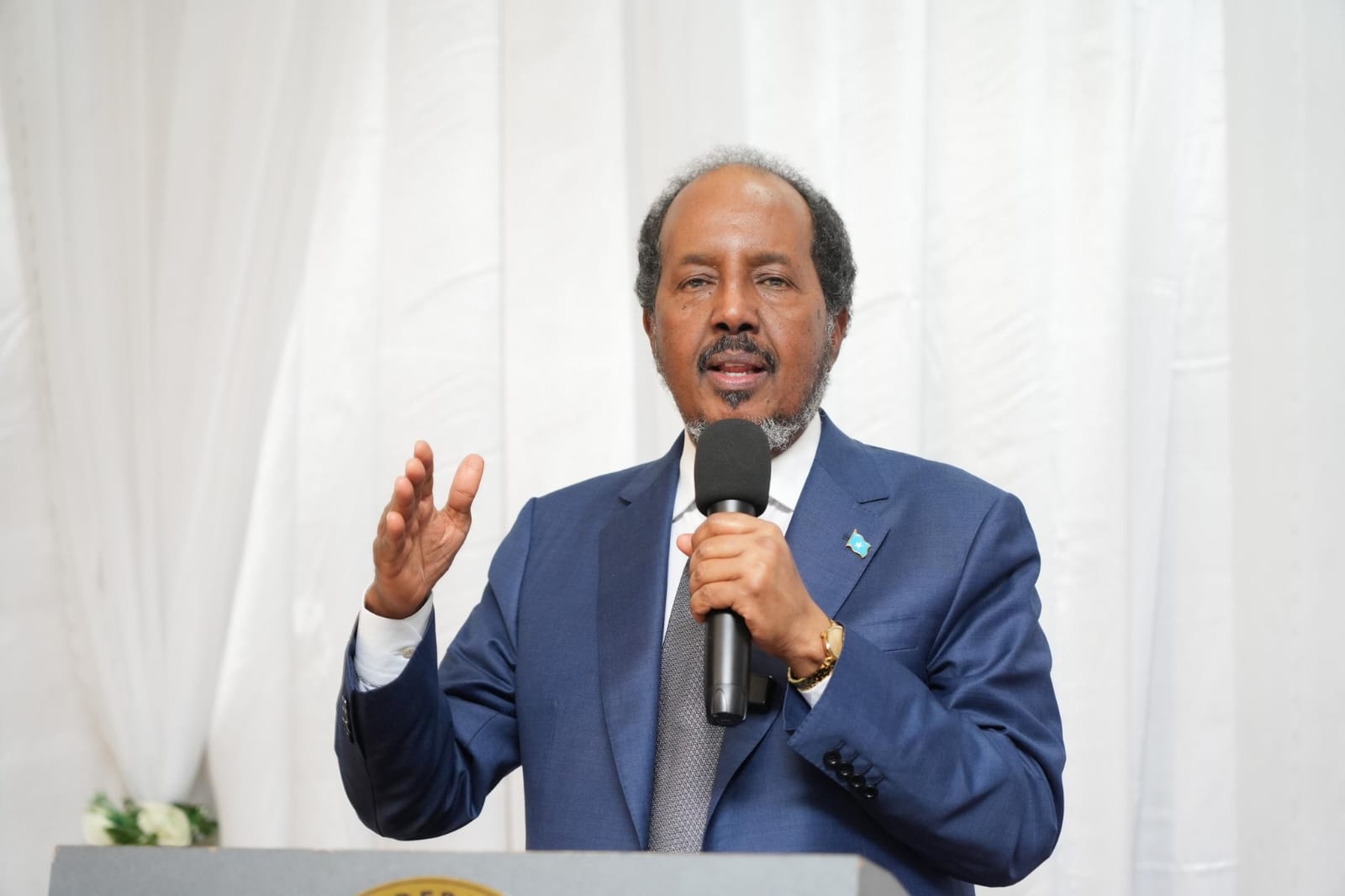
President Hassan Sheikh Mohamud, addressing the nation in a televised speech, described the moment as one of national triumph and renewal.
“Today is a historic day, a day marked by the completion of the National Constitution and the formal conclusion of the long transitional period that had persisted for many years,” the President said. “This is a day that will be remembered for achieving a long-awaited national victory.”
In one of the most symbolic declarations of the day, the President firmly stated:
“Kumeel-gaarnimadii waxay noqotay taariikh laga soo gudbay loona noqon maayo” — The provisional period has become history and will not be returned to.
He further emphasized that the Constitution approved by Parliament is not symbolic but legally binding and operational.
“The Constitution approved today comes into force immediately and will move forward.”
The President underscored that the process was neither rushed nor unilateral. Instead, it followed constitutional procedures carried out by mandated institutions tasked with reviewing and finalizing the document. According to him, the milestone reflects institutional maturity and respect for lawful governance.
Ali Mohamed Omar, the State Minister for Foreign Affairs and a Member of the Federal Parliament, echoed this position, describing the development as a decisive and lawful milestone.
“Somalia’s constitutional review has reached a historic milestone. The mandated institutions have fulfilled their responsibilities and Parliament has voted overwhelmingly. This was not unilateral action, but the result of lawful process,” he said.
He added that the approval marked the conclusion of years of consultation and structured debate.
“Today marks an important milestone. After years of review, consultation, and debate, Somalia’s constitutional review process reached a decisive point. Mandated institutions have completed their work, Parliament voted overwhelmingly to approve the revised constitutional chapters.”
Prime Minister Hamza Abdi Barre also delivered a strong message of congratulations and reflection, commending members of both houses of Parliament the House of the People and the Upper House for what he described as fulfilling a historic responsibility.
“I extend my congratulations and appreciation to the Members of the House of the People and the Upper House of the Federal Parliament of Somalia, the national leadership, and the Somali people on this historic day of approving and completing the chapters of the Constitution of the Federal Republic of Somalia,” the Prime Minister stated.
He characterized the completion of the Constitution as a major step toward consolidating state-building, democracy, and a governance system based on law and accountability.
According to the Prime Minister, the process reflects long-term national planning rather than a short-term political maneuver.
“When we look back at the different stages the constitutional review went through, it was a National Plan aimed at reaching where we stand today.”
With the Constitution now fully enacted, he said Somalia’s statehood stands on firm legal ground.
“From today onward, the Constitution is complete, and our statehood stands on a strong legal foundation that is no longer provisional.”
Both leaders highlighted that one of the core achievements of the finalized Constitution is clarifying the relationship between the Federal Government and Federal Member States a key issue that has shaped Somali politics over the past decade.
The review process is widely viewed as crucial in defining powers, responsibilities, and limits within the federal structure. By addressing ambiguities and strengthening institutional roles, the completed Constitution is expected to reduce political disputes and enhance cooperative governance.
The Prime Minister further noted that the ultimate beneficiaries of the constitutional completion are the Somali people.
“The greatest victory belongs to the 11th Parliament, which had the opportunity to complete the Constitution. But it also belongs to the Somali people, because this Constitution restores to them the power to choose their representatives and leadership.”
The completion of the Constitution comes at a critical time in Somalia’s recovery trajectory. After decades of instability, conflict, and political fragmentation, leaders see the finalized constitutional framework as a cornerstone for durable peace and sovereignty.
By concluding the provisional era, Somalia sends a strong signal that its governance system is maturing and institutionalizing. For international partners, the development may enhance confidence in Somalia’s political direction. For citizens, it represents a formal recognition that the transitional phase once defined by uncertainty has officially ended.
Both the President and Prime Minister urged government institutions to safeguard and enforce the Constitution in order to ensure unity, justice, and sustainable development for present and future generations.
As Somalia embarks on this new constitutional era, the focus now shifts from review to implementation from drafting and amendment to enforcement and institutional performance. The overwhelming parliamentary approval, combined with unified public messaging from the country’s top leadership, projects an image of national alignment at a pivotal moment.
In the words of President Hassan Sheikh Mohamud, it is a victory long awaited and one that marks the beginning of a new era rather than the end of a process.