

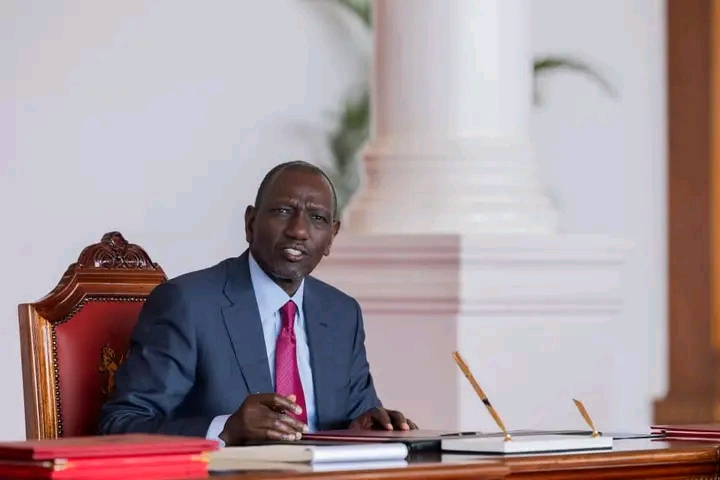
President William Ruto has signed the Finance Bill 2026 into law, ushering in a new fiscal framework that the government says will accelerate economic growth, create jobs, improve public services and strengthen livelihoods across the country under the Bottom-Up Economic Transformation Agenda (BETA).
The President announced the signing of the Finance Act 2026 and the Appropriation Act 2026 while outlining major allocations across key sectors, including infrastructure, healthcare, sports, tourism, digital innovation and fuel stabilization.
The government maintains that the new law does not introduce additional taxes on ordinary Kenyans and instead focuses on improving compliance, sealing tax leakages and ensuring fairness in revenue collection.
“With my assent to the Finance Bill into Finance Act 2026 and the Appropriation Bill Act 2026, Kenya now has the legal framework and the resources to finance its priorities, create jobs, strengthen livelihoods and invest in the future under BETA,” President Ruto said.
He added that the budget should be viewed not merely as an accounting exercise but as a reflection of the country’s development priorities and ambitions.
One of the key highlights of the new budget is the substantial investment in sports infrastructure and talent development.
The government has allocated Ksh26.4 billion to complete 39 sports stadia across the country, support Kenya’s preparations for the 2027 Africa Cup of Nations (AFCON), reward athletes representing the country internationally and finance sporting competitions nationwide.
The investment comes as Kenya intensifies preparations to co-host the 2027 AFCON tournament alongside Uganda and Tanzania, an event expected to place East Africa at the center of continental football and attract significant economic activity.
Tourism, another major pillar of the economy, has also received a significant boost. The government has allocated Ksh14.2 billion for the completion of the Bomas Convention Centre and plans to collaborate with county governments to identify and develop unique tourism attractions and products across the country.
The President said the investment will be accompanied by aggressive marketing campaigns aimed at increasing tourist arrivals to 5.2 million visitors by 2028 while generating close to Ksh1 trillion in tourism revenue.
The digital economy, which has become an important source of employment and entrepreneurship opportunities for young Kenyans, is also set to benefit from increased funding.
A total of Ksh10.5 billion has been allocated to expand digital infrastructure and improve connectivity across the country.
According to the President, the funds will facilitate the connection of 20,000 public institutions, including schools, hospitals and police stations, to fibre-optic networks.
The government will also procure 50,000 devices for Jitume Centres and ICT hubs established across the country to promote digital commerce, online learning and technology-driven employment opportunities.
The investment is expected to strengthen Kenya’s position as a regional technology hub while creating opportunities for young people seeking employment in the growing digital economy.
To cushion consumers from fluctuations in global energy markets, the government has set aside Ksh21.5 billion for fuel stabilization measures.
The administration has also provided seed capital for the establishment of the East African Refinery, a project it believes will offer a long-term solution to persistent fuel supply challenges and reduce vulnerability to international market shocks.Infrastructure remains one of the largest beneficiaries of government spending under the new budget.
President Ruto announced that Ksh225 billion has been allocated to road projects, while an additional Ksh52 billion will support transport infrastructure development.
The President reiterated his administration’s commitment to completing more than 6,000 kilometres of ongoing road projects across the country, arguing that improved infrastructure is essential for economic growth, trade and mobility.
Among the flagship projects receiving funding is the extension of the Standard Gauge Railway (SGR) from Naivasha to Kisumu and onward to Malaba.
The project has been allocated Ksh20.8 billion and is expected to enhance regional trade and improve cargo transportation between Kenya and neighbouring countries.
The government has also earmarked Ksh4.2 billion for the Dongo Kundu Special Economic Zone in Mombasa, a project expected to attract investments, create employment opportunities and strengthen Kenya’s manufacturing sector.
In addition, Ksh3.8 billion has been allocated for flood mitigation and emergency preparedness efforts amid warnings from meteorological experts that the country could experience heavy rains associated with El Niño weather patterns.
Healthcare also emerged as one of the biggest winners in the budget. Funding for the Kenya Medical Supplies Authority (KEMSA) has increased significantly from Ksh5 billion to Ksh21 billion.
The President said the enhanced funding will strengthen the procurement and distribution of medicines and medical supplies to health facilities across the country, helping eliminate shortages of essential drugs.
“With this investment, there should be no shortage of essential medicines in our health facilities,” Ruto stated.
To ensure that the resources translate into better healthcare services, the President announced plans to convene a national health summit within the next month. The summit is expected to bring together stakeholders in the health sector to address challenges and maximize the benefits of the increased funding.
In another major policy announcement, President Ruto declared that no Kenyan should pay for outpatient services at dispensaries, health centres and sub-county health facilities accredited under the Social Health Authority (SHA), whether public, private or faith-based.
He warned healthcare providers against charging patients for services that should be covered under the government-supported healthcare framework and indicated that legal measures could soon be introduced to enforce compliance.
The move is expected to provide relief to millions of Kenyans who continue to struggle with the cost of accessing basic healthcare services.The Finance Act 2026 also contains measures aimed at supporting Kenyans living and working abroad.
In response to concerns raised by travellers and members of the diaspora, the government has increased the duty-free allowance for personal effects and gifts from Ksh39,000 to Ksh260,000.
The revised limit means that returning travellers will be able to bring home significantly more goods without attracting customs duties, a move welcomed by many Kenyans working overseas who frequently support relatives through gifts and household items.
Addressing concerns that had circulated during public discussions on the Finance Bill, President Ruto categorically dismissed claims that the government had introduced new taxes on mobile money transactions, airtime, data bundles and mobile phones.
“There is no new tax on Mpesa or mobile money,” the President said, assuring Kenyans that money transfers and digital financial transactions would continue under the existing tax framework.
He further clarified that no new taxes had been introduced on locally manufactured packaging used for essential products.
The President also sought to counter what he described as misinformation and false claims surrounding the Finance Bill debate.According to Ruto, several proposals that generated public concern were never included in the legislation.
He specifically denied claims that the government intended to introduce taxes on freehold land, impose levies on second-hand clothing commonly known as mitumba, alter rental income tax rates or introduce taxes on bottled water.
The President argued that such claims had contributed to confusion among the public and distorted debate around the proposed law.
Defending the legislative process, Ruto noted that Parliament conducted extensive public participation before passing the bill. He said lawmakers provided multiple platforms, including digital channels, through which Kenyans submitted views, recommendations and objections.
The government maintains that the final law reflects feedback from citizens and focuses on improving efficiency within the tax system rather than imposing new burdens on households.
According to the President, the Finance Act seeks to strengthen compliance, close loopholes and ensure that all individuals and businesses contribute their fair share in accordance with existing laws.
The signing of the Finance Act 2026 marks a critical milestone for the Kenya Kwanza administration as it seeks to balance fiscal discipline with investments aimed at stimulating growth and improving service delivery.
The ambitious spending plan reflects the government’s intention to expand infrastructure, modernize healthcare, strengthen sports and tourism, support digital transformation and shield citizens from economic shocks.
Whether the allocations will translate into tangible improvements for ordinary Kenyans now depends on effective implementation, accountability and the timely completion of projects outlined in the new budget.
As the new financial year begins, attention will shift from policy announcements to execution, with Kenyans keenly watching whether the promises contained in the Finance Act 2026 deliver the jobs, opportunities and improved services envisioned by the government.