

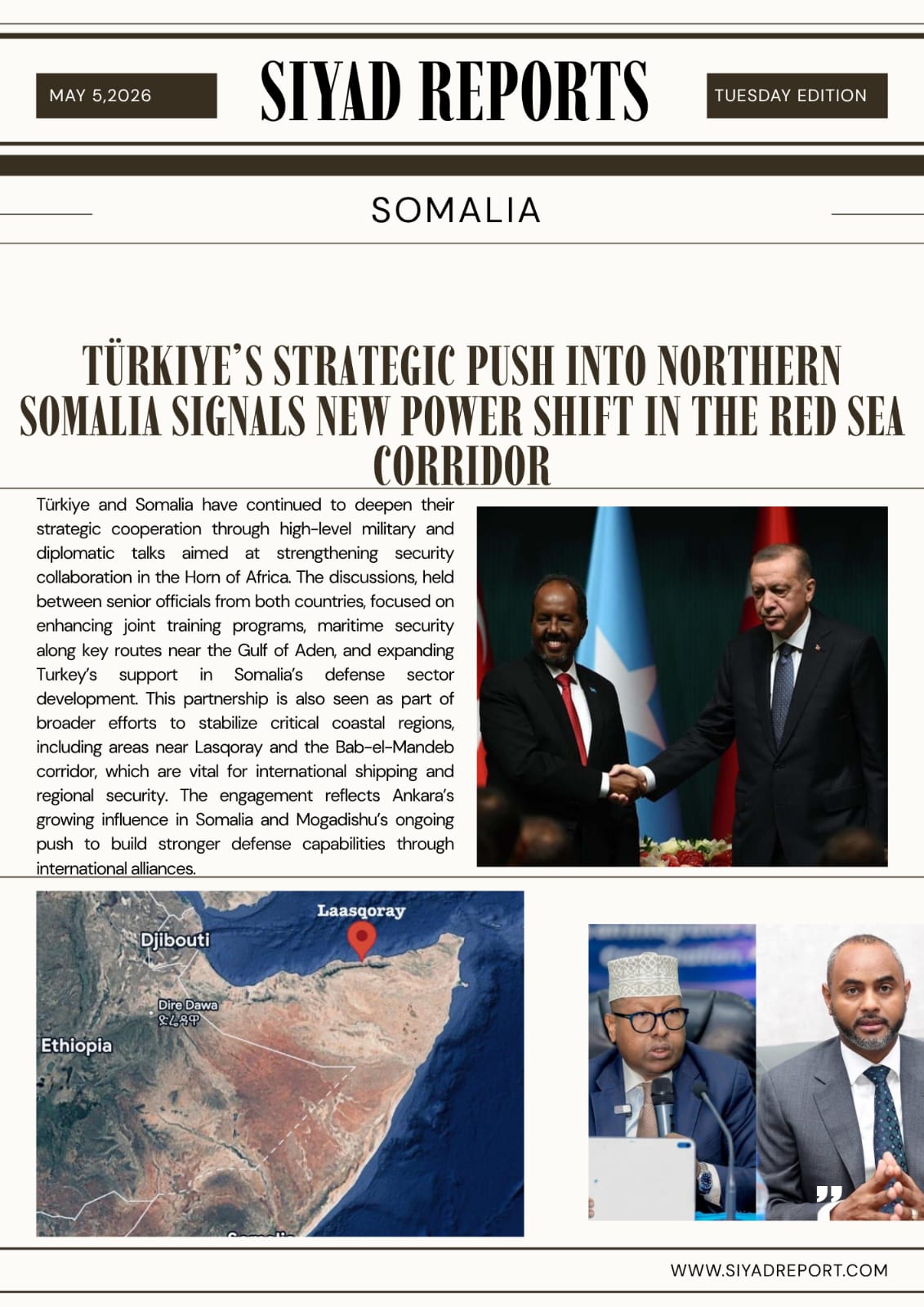
A quiet but highly consequential diplomatic move is unfolding between Somalia and Türkiye, one that could significantly reshape the geopolitical landscape of the Horn of Africa and the wider Red Sea corridor. In recent days, Mogadishu has dispatched a high-level delegation to Ankara, including the ministers of defense and ports, amid advanced discussions over the establishment of a Turkish naval base on Somalia’s northern coastline.
While official confirmations remain limited, multiple sources close to the negotiations suggest that the talks are centered on securing a strategic military foothold in the coastal town of Lasqoray, a location that sits near one of the most critical maritime chokepoints in the world.
The significance of this development goes far beyond a routine bilateral engagement. It reflects a deepening strategic alignment between President Hassan Sheikh Mohamud and his Turkish counterpart Recep Tayyip Erdoğan, whose governments have spent more than a decade building a multifaceted partnership that spans humanitarian aid, infrastructure development, economic investment, and military cooperation.
What began as a humanitarian outreach during Somalia’s 2011 famine has gradually evolved into one of the most robust alliances in Africa, with Türkiye positioning itself not only as a development partner but increasingly as a security actor in a volatile region.
The current talks are rooted in a series of high-level engagements between the two leaders over the past few years, particularly following Hassan Sheikh Mohamud’s return to power in 2022. During multiple visits to Ankara, discussions reportedly expanded beyond traditional cooperation into more strategic domains, including maritime security, naval capacity building, and the protection of international shipping lanes.
These conversations gained urgency as instability in the Red Sea and Gulf of Aden intensified, driven by piracy threats, regional conflicts, and increasing competition among global and regional powers seeking influence over vital trade routes.
At the center of the negotiations is Lasqoray, a coastal city whose geographic position offers immense strategic value.
Located along the northern Somali coast, Lasqoray provides proximity to the Bab el-Mandeb, a narrow maritime passage that connects the Red Sea to the Gulf of Aden and serves as a gateway between Europe, Asia, and Africa. A significant portion of global trade, including oil shipments from the Middle East to Europe, passes through this corridor.
Control or even partial influence over such a route carries enormous geopolitical weight, making Lasqoray an attractive location for any power seeking to project naval influence in the region.
The potential establishment of a Turkish naval base in this area would represent a major shift from Türkiye’s existing military footprint in Somalia. Currently, Ankara operates Camp TURKSOM in Mogadishu, its largest overseas military training facility, where thousands of Somali soldiers have been trained.
However, a base in Lasqoray would signal a transition from training and capacity building to operational naval presence, enabling Türkiye to deploy warships, monitor maritime activity, and respond rapidly to security threats in one of the world’s busiest shipping lanes. Such a move would effectively extend Türkiye’s strategic reach from the Mediterranean into the heart of the Red Sea corridor.
This development must also be understood within the broader geopolitical competition unfolding across the Horn of Africa. The region has become a focal point for international rivalries, with multiple powers establishing military bases and securing port agreements along key coastal corridors.
Just west of the proposed site lies Berbera Port, where the United Arab Emirates has made substantial investments through DP World, transforming it into a major commercial and logistical hub. Reports of expanding security cooperation involving Is Israel in the Red Sea region further complicate the strategic landscape, introducing additional layers of competition and alliance-building.
Meanwhile, neighboring Djibouti hosts an unprecedented concentration of foreign military bases, including those operated by the United States, China, and France. This clustering of global powers underscores the immense importance of the Red Sea and Gulf of Aden as arteries of global commerce and security. In this context, Türkiye’s interest in establishing a presence in northern Somalia appears less like an isolated initiative and more like a calculated step in a broader strategy to secure influence along critical maritime routes.
For Somalia, the implications are both strategic and symbolic. After decades of conflict and limited control over its vast coastline, the federal government is seeking to reassert its authority and enhance its maritime security capabilities. Partnering with Türkiye offers a pathway to achieve these goals, providing access to advanced military training, technology, and infrastructure investment.
A naval base could help Somalia combat illegal fishing, curb piracy, and protect its territorial waters, while also signaling to both domestic and international audiences that the country is re-emerging as a sovereign actor capable of shaping its own security environment.
However, the proposed location of the base introduces a layer of internal complexity that cannot be ignored. Lasqoray lies in the Sanaag region, an area characterized by contested administrative claims and sensitive clan dynamics involving Puntland and Somaliland.
Any agreement involving foreign military presence in this area is likely to trigger political debates and potentially resistance from local actors who may view the move as undermining their authority or interests. Managing these internal dynamics will be critical for the success of any eventual deal.
At the same time, regional reactions are likely to be mixed. The United Arab Emirates, which has invested heavily in Berbera, may perceive a Turkish naval base nearby as a direct challenge to its influence. Ethiopia, a key regional power with its own strategic interests in Red Sea access, will also be closely watching developments.
For Türkiye, navigating these competing interests while maintaining its partnership with Somalia will require careful diplomacy and strategic balancing.
Economically, the potential benefits for Somalia could be significant. Turkish involvement has historically been accompanied by infrastructure development, job creation, and increased trade.
A naval base in Lasqoray could catalyze the modernization of local ports, stimulate economic activity in the region, and attract further foreign investment. Yet these benefits will depend on how the project is implemented and whether it can be integrated into broader national development plans.
The current delegation’s visit to Ankara marks the most concrete step yet in what appears to be a long-planned strategic initiative. The inclusion of both the defense and ports ministers highlights the dual nature of the negotiations, which span both military and economic domains.
While the final outcome remains uncertain, the trajectory of discussions suggests that Somalia and Türkiye are moving closer to formalizing an agreement that could redefine their partnership and alter the balance of power in the Horn of Africa.
Ultimately, this unfolding story is not just about a military base; it is about the intersection of geography, politics, and global ambition. It reflects Türkiye’s determination to expand its influence beyond its immediate neighborhood, Somalia’s effort to reclaim its strategic relevance, and the intensifying competition among global powers for control over the world’s most critical maritime routes.
As negotiations continue behind closed doors in Ankara, the implications of this potential agreement are already rippling across the region, signaling a new chapter in the geopolitics of the Red Sea corridor.
Israel in the Red Sea region further complicate the strategic landscape, introducing additional layers of competition and alliance-building.
Meanwhile, neighboring Djibouti hosts an unprecedented concentration of foreign military bases, including those operated by the United States, China, and France. This clustering of global powers underscores the immense importance of the Red Sea and Gulf of Aden as arteries of global commerce and security. In this context, Türkiye’s interest in establishing a presence in northern Somalia appears less like an isolated initiative and more like a calculated step in a broader strategy to secure influence along critical maritime routes.
For Somalia, the implications are both strategic and symbolic. After decades of conflict and limited control over its vast coastline, the federal government is seeking to reassert its authority and enhance its maritime security capabilities. Partnering with Türkiye offers a pathway to achieve these goals, providing access to advanced military training, technology, and infrastructure investment.
A naval base could help Somalia combat illegal fishing, curb piracy, and protect its territorial waters, while also signaling to both domestic and international audiences that the country is re-emerging as a sovereign actor capable of shaping its own security environment.
However, the proposed location of the base introduces a layer of internal complexity that cannot be ignored. Lasqoray lies in the Sanaag region, an area characterized by contested administrative claims and sensitive clan dynamics involving Puntland and Somaliland.
Any agreement involving foreign military presence in this area is likely to trigger political debates and potentially resistance from local actors who may view the move as undermining their authority or interests. Managing these internal dynamics will be critical for the success of any eventual deal.
At the same time, regional reactions are likely to be mixed. The United Arab Emirates, which has invested heavily in Berbera, may perceive a Turkish naval base nearby as a direct challenge to its influence. Ethiopia, a key regional power with its own strategic interests in Red Sea access, will also be closely watching developments.
For Türkiye, navigating these competing interests while maintaining its partnership with Somalia will require careful diplomacy and strategic balancing.
Economically, the potential benefits for Somalia could be significant. Turkish involvement has historically been accompanied by infrastructure development, job creation, and increased trade.
A naval base in Lasqoray could catalyze the modernization of local ports, stimulate economic activity in the region, and attract further foreign investment. Yet these benefits will depend on how the project is implemented and whether it can be integrated into broader national development plans.
The current delegation’s visit to Ankara marks the most concrete step yet in what appears to be a long-planned strategic initiative. The inclusion of both the defense and ports ministers highlights the dual nature of the negotiations, which span both military and economic domains.
While the final outcome remains uncertain, the trajectory of discussions suggests that Somalia and Türkiye are moving closer to formalizing an agreement that could redefine their partnership and alter the balance of power in the Horn of Africa.
Ultimately, this unfolding story is not just about a military base; it is about the intersection of geography, politics, and global ambition. It reflects Türkiye’s determination to expand its influence beyond its immediate neighborhood, Somalia’s effort to reclaim its strategic relevance, and the intensifying competition among global powers for control over the world’s most critical maritime routes.
As negotiations continue behind closed doors in Ankara, the implications of this potential agreement are already rippling across the region, signaling a new chapter in the geopolitics of the Red Sea corridor.