

Shock, grief, and rising political tension have engulfed Mandera County following the deadly attack along the Arabia–Mandera road that left six people dead and several others injured, an incident that has triggered strong reactions from political leaders, elders, and residents who are now demanding the immediate removal of alleged Jubaland security forces operating in the area.
The killings, which occurred on Saturday near Arabia town, have intensified long-standing concerns among local leaders and communities over the presence of armed Jubaland forces inside Kenyan territory. Leaders from Mandera described the attack as tragic, unacceptable, and a serious threat to the safety and stability of residents living along the border region.
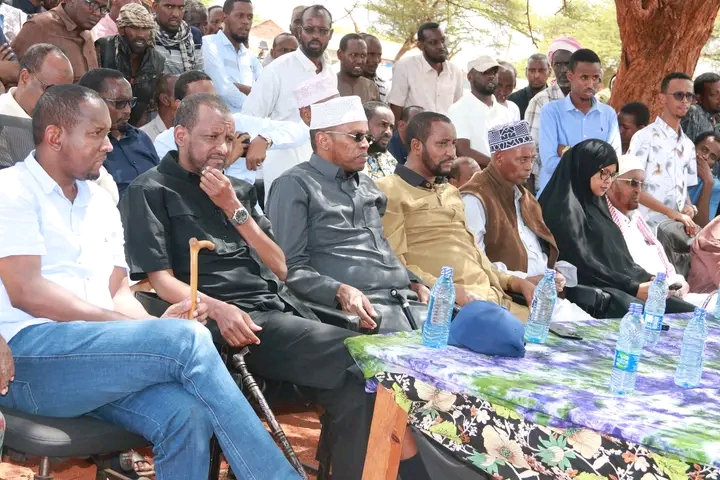
In the aftermath of the incident, a delegation comprising political leaders, elders, religious figures, and Mandera County Woman Representative Hon. Umulkheir Kassim travelled to Arabia town to condole with the bereaved families and assess the situation on the ground. The leaders later visited survivors receiving treatment at Mandera County Referral Hospital, where some of the victims are still recovering from injuries sustained during the attack.
The tragedy has now opened a wider political debate over security management in Mandera and the alleged operations of Jubaland-linked armed personnel within Kenyan territory. Several leaders accused the forces of contributing to insecurity and fear among residents, while also faulting the Kenyan government for allegedly failing to respond despite repeated complaints.
Nominated MP Abdirisalat Khalif was among the leaders who strongly criticised the situation, claiming that concerns regarding the alleged presence of Jubaland forces in Mandera had previously been raised with senior government officials, including President William Ruto, but no action had been taken.
Speaking emotionally following the killings, the MP questioned why residents were continuing to suffer despite repeated warnings from leaders and local communities.
“This gorilla-style militia coming from Somalia have killed our people. We are now witnessing six deaths in Arabia,” said MP Abdirisalat Khalif.
The legislator further demanded urgent intervention from the Kenyan government, insisting that anyone hosting the alleged forces within Mandera for business, political, or other purposes should immediately facilitate their removal from civilian areas.
He argued that if the forces were legally recognised or allowed within Kenya, they should be relocated to official military facilities far from residential areas and civilian movement routes.
The MP proposed that the personnel be transferred to military barracks such as Kahawa, Eldoret, or other designated government facilities outside Mandera within 72 hours.
His remarks reflected the growing frustration among leaders who believe the continued presence of foreign-linked armed groups inside Mandera has worsened insecurity and increased tensions among local communities already struggling with years of cross-border instability.
The deadly incident has also triggered strong reactions from local MPs and community leaders, many of whom warned that patience among residents was rapidly running out.
Lafey MP Hon. Mohamed Abdikher issued one of the strongest warnings yet, giving the government a three-day ultimatum to remove the alleged Jubaland forces from the region.
According to the MP, failure by the authorities to act would force residents to take matters into their own hands.
He accused the government of ignoring the suffering of ordinary civilians and warned that anger within the local population was reaching dangerous levels following the deaths in Arabia.
The MP’s statement has further heightened political pressure on the government at a time when security concerns in Kenya’s northeastern region remain highly sensitive.
Mandera County Woman Representative Hon. Umulkheir Kassim also delivered a strongly worded message while addressing residents in Arabia during the condolence visit.
The Woman Representative condemned the killing of innocent civilians and expressed solidarity with the grieving families, describing the attack as heartbreaking and unacceptable.
She warned that if the government failed to address residents’ concerns and remove the alleged Jubaland forces from the area, frustrated locals might eventually resort to taking action themselves.
Her remarks reflected the deep emotional anger and fear currently spreading across communities affected by the attack.
Residents in Arabia and surrounding areas say insecurity has continued to affect normal movement, business activities, and everyday life, particularly along roads frequently used by civilians and transport operators.
Community elders who accompanied the delegation to Arabia also condemned the killings and called for immediate intervention from Nairobi.
They urged the government to prioritise the protection of civilians and restore confidence among residents who now fear for their safety.
Religious leaders present during the visit prayed for the victims and called for peace, restraint, and justice, warning that failure to address growing tensions could create further instability in the region.
During the visit to Mandera County Referral Hospital, leaders spent time with the injured victims and their families, listening to their experiences and assuring them of support during recovery.
The delegation also facilitated the emergency airlifting of one injured elder to Nairobi for specialised treatment after doctors reportedly recommended advanced medical care.
The emotional scenes at the hospital highlighted the devastating human cost of the attack, with grieving relatives demanding accountability and urgent security action from the government.
Families affected by the tragedy described the pain of losing loved ones in what they believed should have been a secure area under Kenyan authority.
Many residents expressed fears that continued insecurity along the border could expose more civilians to danger if urgent action is not taken.
The Arabia attack has once again drawn national attention to the fragile security situation along the Kenya-Somalia border, an area that has historically experienced tensions involving militant attacks, clan disputes, cross-border operations, and political disagreements linked to Somalia’s regional administrations.
However, the latest incident appears to have introduced a new level of political confrontation, particularly over the alleged role and presence of Jubaland security personnel inside Kenyan territory.
Local leaders insist that the issue is no longer merely a security concern but also a matter of national sovereignty and civilian safety.
Some leaders argued that residents have repeatedly raised complaints regarding armed groups operating within Mandera but felt ignored by authorities.
The anger expressed during the Arabia visit demonstrated how deeply the latest killings have affected local communities.
Residents who gathered to receive the visiting leaders openly expressed grief, frustration, and fear over the future security situation in the area.
Others questioned why civilians continued to die despite the heavy security presence often deployed across parts of northeastern Kenya.
The attack has also sparked wider discussions among residents on social media and within local political circles, with many demanding transparent investigations into the incident and accountability for those responsible.
At the same time, some leaders cautioned against inflammatory rhetoric that could further increase tensions or provoke violence among communities already traumatised by insecurity.
Security agencies have yet to publicly provide comprehensive details regarding the exact circumstances surrounding the Arabia attack, including who carried out the killings and the broader security context behind the incident.
Nevertheless, the strong statements issued by Mandera leaders have placed significant pressure on both county and national authorities to respond swiftly.
Political observers note that the coming days may prove critical as the government faces growing calls to clarify the status of Jubaland-linked personnel allegedly operating within Mandera and explain what measures are being taken to prevent further violence.
For many residents in Arabia, however, the immediate focus remains mourning the victims and supporting the injured families affected by Saturday’s tragedy.
The pain of the attack was visible throughout the condolence gatherings as families struggled to come to terms with the sudden loss of loved ones.
Prayers were held for the deceased, while elders appealed for calm and unity during the difficult period facing the community.
Yet beneath the calls for peace lies growing public anger and anxiety over what residents describe as continued insecurity and uncertainty along the border region.
As pressure mounts on the government to respond, leaders in Mandera insist that the safety of civilians must come first and that urgent decisions are needed to prevent further bloodshed.
The deadly Arabia incident has now become more than just another security tragedy in northeastern Kenya. It has evolved into a politically charged issue touching on border security, foreign armed presence, local frustrations, and the relationship between communities and the state.
Whether the government responds to the demands issued by Mandera leaders in the coming days may determine not only the security situation in the area but also the level of public trust among residents who now feel increasingly vulnerable after the deaths of six civilians on the Arabia–Mandera road.