

What began as a single, tragic incident in Garissa has rapidly evolved into a complex and deeply worrying security crisis stretching across county boundaries, exposing fragile inter-community relations and testing the capacity of the state to maintain order in one of Kenya’s most sensitive regions.
The killing of a young man by a security officer in Garissa did not just end a life it ignited a chain reaction of anger, suspicion, and retaliatory tensions that have since spiraled into violent confrontations along the Mwingi–Garissa Road, particularly affecting communities straddling Kitui County and Garissa County.
The initial incident, according to eyewitness accounts and local reports, occurred under circumstances that remain contested. A young civilian, described by residents as unarmed, was reportedly shot dead by a member of the security forces in Garissa town. While authorities have yet to fully disclose the details surrounding the confrontation, the perception among locals was immediate and emotionally charged, that excessive force had been used, and that justice was uncertain.
In regions where historical grievances and distrust toward authority already exist, such incidents rarely remain isolated. Instead, they resonate deeply, often becoming symbolic of broader frustrations.
Within hours, tension began to build in Garissa. Residents took to the streets in protest, demanding accountability and answers. What might have been a contained public outcry soon escalated into running battles between sections of the community and security officers. Teargas filled the air, businesses shut down, and fear spread across neighborhoods.
The situation was further complicated by reports that the officer involved in the shooting had fled the area, fueling perceptions of impunity and further eroding public trust.
Amid the unrest, a new and dangerous narrative began to take shape. A video circulated widely on social media, allegedly recorded by a local political aspirant, made remarks that many interpreted as inflammatory and capable of inciting ethnic division. Whether intentional or not, the impact was immediate.
What had started as a protest against a police shooting began to morph into something far more volatile an inter-community confrontation that extended beyond Garissa and into neighboring regions.
The tension quickly spilled over into the border areas between Kitui and Garissa counties, particularly along the Mwingi–Garissa corridor. This region is home to a mix of communities, including Somali populations predominantly residing in North Eastern Kenya and Kamba communities from Kitui. Historically, these communities have coexisted, albeit with underlying tensions occasionally linked to resources, trade routes, and political representation. However, the events following the Garissa shooting acted as a catalyst, bringing latent divisions to the surface.
Clashes were soon reported in areas near Mwingi, with groups allegedly targeting each other’s property and engaging in violent confrontations. Vehicles traveling along the highway were stopped, some attacked, and transport services disrupted.
The road, a critical link between the northeastern region and other parts of Kenya, effectively became a flashpoint of conflict. Fear gripped travelers, many of whom found themselves caught in the middle of a rapidly deteriorating security situation.
Casualty figures, while still being verified, indicate a grim toll. Several lives have reportedly been lost in the clashes, with many others sustaining injuries. Homes and businesses have been destroyed, displacing families and disrupting livelihoods.
The humanitarian impact is already visible, with affected communities facing uncertainty, loss, and trauma. For many residents, the violence has not only threatened their safety but also shattered the fragile sense of coexistence that had been built over years.
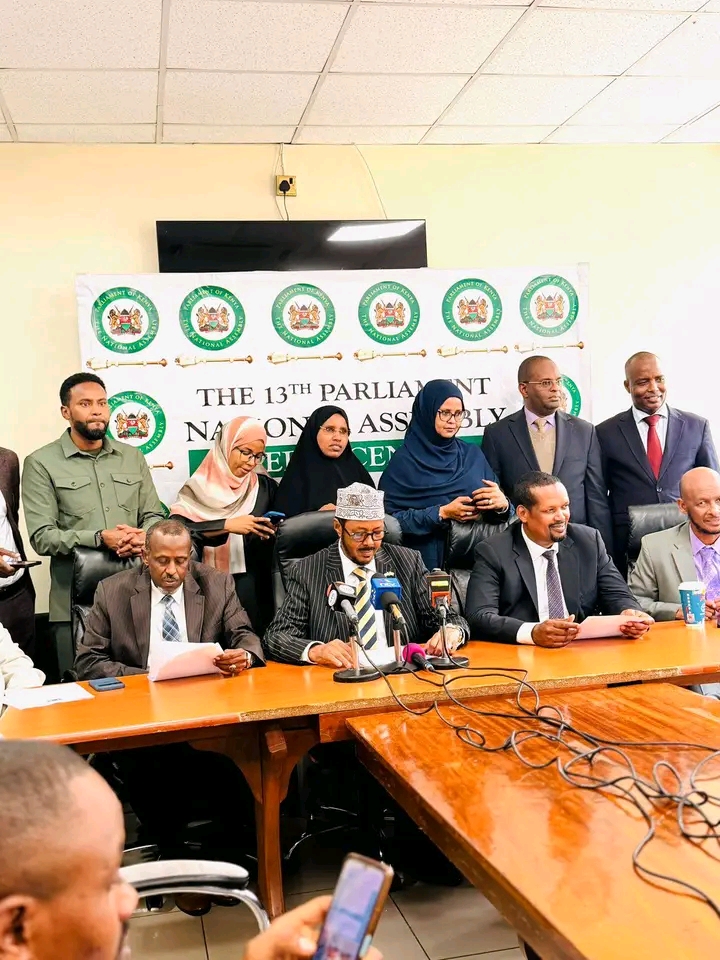
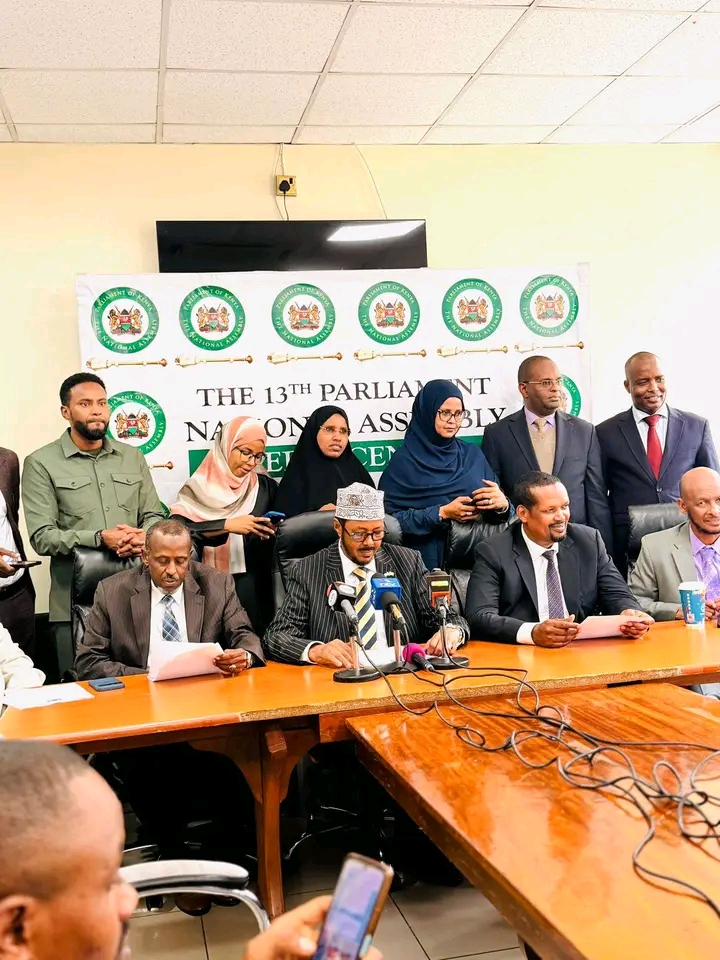
As the situation escalated, leaders from the North Eastern region moved to respond collectively. The North Eastern Parliamentary Group issued a strong and unequivocal press statement condemning the violence and calling for immediate action.
Their message reflected both urgency and concern, highlighting the severity of the crisis and the need for decisive intervention.
In their statement, the leaders expressed shock at the escalating tensions and the tragic loss of lives. They described the incidents as a serious deterioration of security and stability, emphasizing that such violence represents a grave affront to peace, human dignity, and the rule of law.
Importantly, they extended condolences to the affected families, signaling an awareness of the human cost behind the headlines.
The parliamentary group did not shy away from addressing the underlying dynamics of the conflict. They strongly condemned acts of violence fueled by ethnic hostility, incitement, and lawlessness, warning that such actions threaten the very foundation of peaceful coexistence in the region. Their language was deliberate and firm, underscoring a critical point: that violence, regardless of grievance, cannot be justified as a means of resolving disputes.
At the same time, the statement called for restraint among all communities. In a context where retaliatory violence often perpetuates cycles of conflict, this appeal is both necessary and difficult. Emotions on the ground remain high, and calls for calm must contend with anger, grief, and mistrust.
Nevertheless, the emphasis on dialogue and lawful conflict resolution reflects an understanding that sustainable peace cannot be achieved through force alone.
Equally significant was the group’s call to security agencies. They demanded urgent, firm, and impartial action to restore law and order, including thorough investigations and the prosecution of those responsible for the violence. This point is particularly crucial given that the crisis itself was triggered by an alleged act of misconduct by a security officer. Restoring public confidence requires not only controlling the violence but also demonstrating accountability at all levels.
The leaders also highlighted the broader implications of the crisis. Peace and stability, they noted, are the foundation upon which development and prosperity are built. In regions like North Eastern Kenya, where economic opportunities are already limited and infrastructure challenges persist, prolonged instability can have far-reaching consequences.
Trade routes may be disrupted, investment discouraged, and social cohesion weakened, creating a cycle that is difficult to break.
Perhaps most importantly, the parliamentary group signaled a willingness to engage in dialogue with leaders from neighboring counties, including Kitui and Garissa. This commitment to inter-county collaboration is a critical step toward de-escalation. Conflicts of this nature cannot be resolved by one side alone; they require coordinated efforts, mutual understanding, and a shared commitment to peace.
Yet even as these efforts begin, significant challenges remain. The rapid escalation of the crisis underscores the role of misinformation and incitement in amplifying tensions. Social media, while a powerful tool for communication, has also become a conduit for unverified claims and inflammatory content. In such an environment, narratives can shift quickly, often outpacing official responses and complicating efforts to manage the situation.
Moreover, the incident highlights deeper structural issues that extend beyond the immediate crisis. Questions about policing, accountability, and community relations are central to understanding why a single incident could trigger such widespread unrest. In areas where trust between citizens and security forces is fragile, incidents of perceived injustice can have disproportionate effects, igniting broader grievances.
The inter-community dimension of the conflict also points to the need for sustained peacebuilding efforts. While political leaders can call for calm, lasting stability requires grassroots engagement, dialogue, and reconciliation. Community elders, religious leaders, and civil society organizations all have a role to play in bridging divides and rebuilding trust.
As the situation continues to evolve, the priority remains clear: to stop the violence, protect lives, and restore order. Security deployments have reportedly been increased in affected areas, and efforts are underway to stabilize the region. However, the effectiveness of these measures will depend not only on their immediate impact but also on their ability to address the underlying causes of the conflict.
For residents along the Mwingi–Garissa road, the crisis is not an abstract political issue it is a daily reality. It affects their ability to travel, to work, and to live without fear. For families who have lost loved ones, the impact is permanent and deeply personal. And for the region as a whole, the events serve as a stark reminder of how quickly peace can unravel.
In the coming days and weeks, the response of both government and community leaders will be critical. Transparent investigations into the initial shooting, accountability for those involved in the violence, and meaningful dialogue between affected communities are all essential steps. Without them, the risk of further escalation remains high.
Ultimately, the crisis along the Mwingi–Garissa road is a test not only of security systems but of the broader social fabric. It challenges leaders to act decisively, communities to choose restraint over retaliation, and institutions to uphold justice without bias. The path forward will not be easy, but it is necessary.
Because beyond the politics, beyond the headlines, and beyond the immediate crisis lies a fundamental question: can communities with shared histories and intertwined futures find a way to coexist peacefully, even in the face of tragedy?
The answer will shape not only the outcome of this conflict but the future of the region itself.