

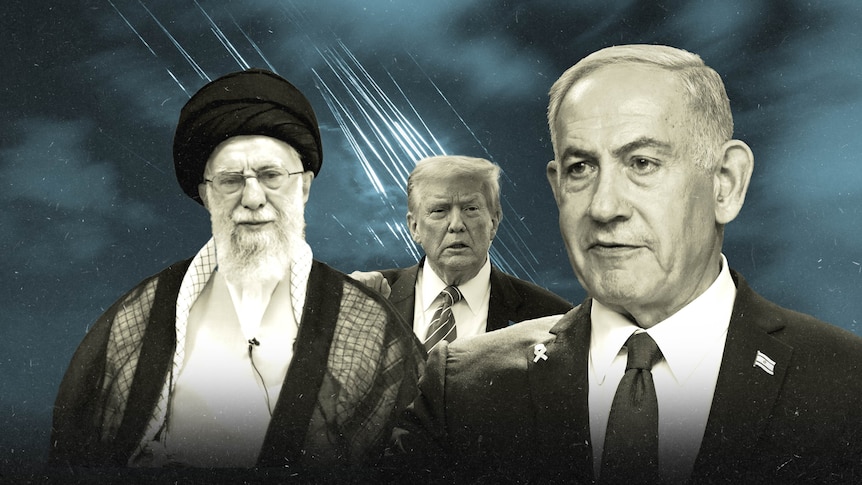
In the unfolding and increasingly complex confrontation involving Iran, Israel, and United States, the situation has entered a phase where military action, diplomatic messaging, intelligence operations, and psychological warfare are no longer separate domains, but instead deeply interconnected layers of the same strategic conflict.
Reports attributed to Israeli Channel 12 suggest that Iran is attempting to reshape the structure of potential negotiations aimed at ending or reducing hostilities by insisting that major global powers such as Russia and China be included in any diplomatic framework. According to these reports, Iran’s motivation is rooted in a fundamental concern that direct negotiations with the United States alone cannot be trusted to produce stable or lasting outcomes.
This concern is not new in Iranian foreign policy thinking. It reflects decades of accumulated mistrust, shaped by shifting geopolitical realities, sanctions regimes, and historical experiences where agreements were either modified, reinterpreted, or abandoned depending on political changes in Washington. From Iran’s strategic perspective, negotiations that involve only one dominant Western power create a structural imbalance where enforcement, interpretation, and political continuity are controlled by a single actor or alliance system.
By contrast, introducing Russia and China into the negotiation architecture would transform the process into a multipolar framework, reducing the ability of any single state to dictate outcomes or redefine terms unilaterally.
In essence, Iran’s reported diplomatic strategy is not merely about peace negotiations; it is about power balancing within the negotiation system itself. International negotiations are not neutral conversations they are structured power environments where each participant seeks to maximize leverage.
By demanding broader international guarantees, Iran is attempting to ensure that any agreement becomes politically and strategically binding beyond the influence of any one administration or alliance.
At the same time, Iranian officials are reportedly seeking formal international guarantees that any agreement reached would not be used as a tool for deception or strategic manipulation. This reflects a deeper structural problem in global diplomacy: the absence of a universally trusted enforcement authority.
Unlike domestic law systems, international relations operate in an anarchic environment where compliance is based on power, trust, and mutual interest rather than enforceable global jurisdiction. As a result, weaker or middle-power states often seek external guarantors to stabilize agreements and reduce vulnerability to political shifts in stronger powers.
While these diplomatic maneuvers unfold, the military dimension of the conflict is simultaneously intensifying in a far more direct and kinetic way. Reports indicate that strikes or coordinated attacks have taken place inside Iranian territory, including disruptions to electrical infrastructure in Tehran and other major cities.
These incidents, whether attributed to Israel, the United States, or coordinated intelligence operations, highlight a significant evolution in modern warfare: the targeting of critical infrastructure as a means of strategic pressure rather than conventional battlefield engagement.
Electricity systems are not merely civilian utilities; they are the backbone of modern state functionality.
Military command systems, air defense coordination, intelligence communications, industrial production, and even financial networks depend heavily on stable energy infrastructure. Disrupting electricity does not only create civilian hardship it introduces systemic instability into the operational capacity of the state itself. This is why energy infrastructure has become a central focus in modern hybrid warfare strategies.
The strategic logic behind targeting or disrupting electricity systems is closely tied to the concept of coercive pressure through systemic disruption. Instead of attempting to defeat an adversary through direct military occupation or large-scale destruction, states may instead attempt to gradually weaken the opponent’s operational environment to the point where political decision-making becomes constrained by internal pressures. This form of warfare is subtle, often deniable, and designed to avoid triggering full-scale escalation while still exerting meaningful strategic influence.
In the current context, the reported disruption of electricity in Iranian cities is interpreted within this framework of pressure-based escalation. However, such actions also carry significant risks, particularly the risk of unintended escalation.
When critical infrastructure is targeted, the distinction between civilian and military impact becomes blurred, and the likelihood of retaliation increases significantly.
The diplomatic response from Iran further complicates the situation. According to the narrative, Iran has officially acknowledged receiving a proposal reportedly structured around 15 points aimed at de-escalating the conflict. However, Iranian officials have described elements of this proposal as unacceptable, suggesting that the conditions do not meet Iran’s minimum strategic requirements.
This rejection is not merely procedural; it signals a continued gap between the negotiating positions of the parties involved, particularly on issues of security guarantees, sanctions relief, and military limitations.
In international negotiations involving adversarial states, proposals often serve multiple functions beyond their literal content. They act as testing mechanisms for political boundaries, tools for measuring the opponent’s flexibility, and instruments for shaping international perception.
A rejection, therefore, does not necessarily signify the end of negotiations, but rather the continuation of a strategic bargaining process where each side attempts to define acceptable limits.
The most controversial and strategically significant dimension of the current escalation lies in the question of responsibility for the reported strikes inside Iran. The uncertainty surrounding whether these actions were carried out by Israel, the United States, or coordinated jointly reflects a broader feature of modern conflict: strategic ambiguity.
States involved in covert or semi-covert operations often avoid direct acknowledgment of their actions to maintain plausible deniability, reduce diplomatic consequences, and preserve operational flexibility.
From a strategic standpoint, the United States faces a particularly complex position. While maintaining strong political and military alignment with Israel, it also seeks to avoid direct large-scale military confrontation with Iran that could destabilize the broader region and disrupt global energy markets.
As a result, U.S. strategy in the region has often been characterized by a combination of economic sanctions, diplomatic pressure, intelligence cooperation, and limited military signaling rather than open warfare.
Israel, on the other hand, operates under a doctrine that prioritizes preemptive threat reduction. Its strategic worldview is shaped by the belief that emerging military capabilities in hostile neighboring states must be disrupted before they reach a level considered existential.
This creates a dynamic where limited strikes or covert operations are viewed not as escalation, but as preventive security measures. Iran, however, interprets such actions as direct aggression, thereby reinforcing its own deterrence-based military posture.
The interaction between these doctrines creates a cycle of action and reaction that is inherently unstable. Each side interprets its own actions as defensive or necessary, while interpreting the actions of the other as escalatory or aggressive. This perceptual divergence is one of the key drivers of prolonged geopolitical conflict.
A particularly important element in the current situation is Iran’s reported reliance on underground military infrastructure and concealed strategic assets. While specific operational details remain classified and subject to speculation, it is widely assessed that Iran has developed extensive subterranean facilities for missile storage, command operations, and military coordination.
These facilities are designed to ensure operational continuity even under conditions of sustained aerial surveillance or targeted strikes.
The existence of such infrastructure introduces a major challenge for intelligence and military planners attempting to locate and neutralize strategic assets. Modern surveillance technologies, including satellite-based thermal imaging and electromagnetic signal detection, can identify anomalies in terrain activity.
However, detection does not automatically translate into actionable intelligence. Analysts must differentiate between meaningful military signatures and environmental or civilian noise.
For example, underground facilities that rely on backup generators during power outages may produce heat signatures detectable from space. However, similar heat signatures can also be produced by non-military sources, including industrial activity or natural geological conditions. This ambiguity makes precision targeting extremely complex and reduces the certainty of intelligence assessments.
The reported idea that electricity disruption could force underground facilities to reveal themselves is based on a broader military principle: forcing adaptive behavior that creates detectable signals.
However, this strategy is not guaranteed to succeed and carries significant risks. If underground systems are highly resilient or decentralized, they may not produce identifiable patterns at all. Instead, they may simply continue operations with minimal external exposure.
At the same time, Iran’s strategic doctrine includes deterrence mechanisms aimed at expanding the conflict beyond its immediate theater if critical infrastructure is targeted. Reports suggest that Iran has previously indicated it could respond to attacks on its domestic infrastructure by targeting energy systems in regional states, particularly in the Gulf region. Such a scenario would have immediate global consequences, given the central role of Gulf energy exports in international markets.
This introduces a broader geopolitical risk: the possibility that localized escalation could rapidly expand into a regional or even global energy crisis. In such a scenario, the economic impact would extend far beyond the immediate parties involved in the conflict, affecting global inflation, trade stability, and energy security.
Within this highly sensitive environment, both Iran and its adversaries appear to be engaged in a continuous cycle of signaling and counter-signaling. Military actions, diplomatic statements, intelligence leaks, and media reports all function as instruments of strategic communication. Even unverified information can influence decision-making by shaping perceptions of capability, intention, or vulnerability.
The involvement of external powers such as Russia and China further complicates the system. Iran’s desire to include them in negotiations reflects a broader shift toward multipolar diplomacy, where global influence is distributed among multiple competing centers of power rather than concentrated in a single dominant bloc.
This approach is designed to reduce dependency on Western-led diplomatic frameworks and increase Iran’s strategic options.
However, the feasibility of such a multipolar negotiation structure depends on the willingness of all major powers to actively participate and enforce outcomes, which is not guaranteed.
Russia and China may have strategic interests in the region, but their level of direct involvement in conflict resolution varies depending on broader global priorities.
As the situation continues to evolve, the central dynamic remains one of controlled escalation under conditions of high uncertainty. Each actor seeks to increase leverage without triggering uncontrollable consequences. Yet the very nature of such a system makes miscalculation a constant risk.
In environments where military action, intelligence operations, and diplomatic negotiations occur simultaneously, even minor events can produce disproportionate strategic effects.
Ultimately, what is unfolding is not a traditional war in the classical sense, but a multi-dimensional confrontation operating across physical, informational, and psychological domains. Electricity grids, satellite systems, underground facilities, diplomatic proposals, and media narratives all form part of a single integrated battlefield where the boundaries between war and diplomacy are increasingly blurred.
In such a context, stability is not a fixed condition but a temporary equilibrium maintained by constant adjustment. And as long as mistrust remains unresolved and strategic objectives remain incompatible, the system will continue to operate at the edge of escalation, where every action carries the potential to shift the balance toward either negotiation or deeper conflict.