

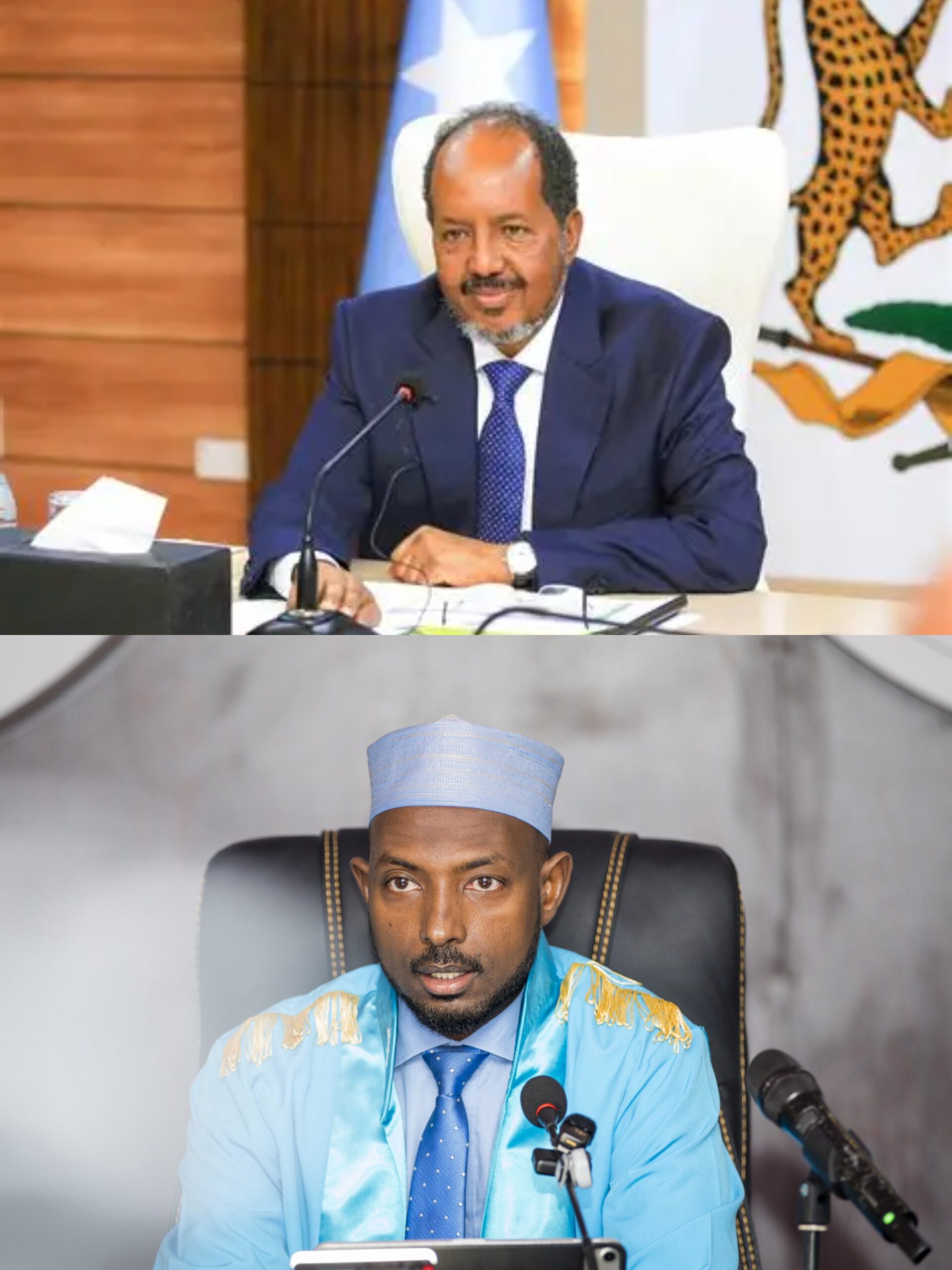
Somalia’s Supreme Court has once again entered the centre of the country’s political storm, and the timing could hardly be more consequential. On August 24, the court annulled the results of the July 30 elections for Galmudug’s House of Representatives and local councils, ruling that the process had not been conducted in accordance with the Constitution and electoral law. Chief Justice Baashe Yusuf Ahmed ordered fresh elections and directed that the existing Galmudug institutions remain in place in a caretaker capacity until a legally compliant electoral process is completed.
On the surface, this is an electoral dispute. At a deeper level, however, it is another chapter in Somalia’s unresolved struggle over the boundaries of political power, judicial authority and electoral legitimacy. The ruling comes at precisely the kind of moment in which Somalia’s political temperature is rising: the country is attempting to institutionalise direct elections, political parties are competing for influence, federal and state authorities are navigating increasingly complicated constitutional relationships, and every electoral decision carries consequences far beyond the ballot box.
The Galmudug ruling is therefore important not simply because one election has been cancelled, but because the Supreme Court has demonstrated that it is prepared to intervene when it concludes that an electoral process has crossed constitutional and legal boundaries. The court said the irregularities were serious enough to undermine the transparency, freedom and fairness of the July 30 vote and affect its outcome.
It consequently declared the results legally invalid and ordered the national electoral authorities to organise fresh elections.
That is a powerful judicial statement at a sensitive moment for President Hassan Sheikh Mohamud’s administration.
The political consequences are already beginning to emerge. Reports from Mogadishu say President Hassan Sheikh Mohamud, Prime Minister Hamza Abdi Barre and the head of the national intelligence service held a closed-door meeting at the Prime Minister’s residence following the Supreme Court ruling. The details and outcome of that meeting have not been publicly established, but its reported timing illustrates the seriousness with which the federal leadership is treating the judgment.
The administration now faces a difficult political calculation. It can embrace the ruling as evidence that Somalia’s institutions are becoming strong enough to police elections, or it can regard the judgment as a major disruption to an electoral process that the government has invested significant political capital in. Either way, the Galmudug decision has created a new problem for Mogadishu: an election that was presented as part of Somalia’s transition toward direct voting has now been declared legally defective.
That matters because Galmudug was not merely another regional election. The July 30 vote was part of the wider experiment with direct, one-person-one-vote elections at the federal member-state level. Reports from the election day described voting across 11 districts and characterised the process as an important test of Somalia’s democratic transition.
The results subsequently placed the Justice and Solidarity Party in a dominant position, while Towfiiq and other political organisations challenged aspects of the process. The electoral commission had itself acknowledged irregularities at two polling stations and excluded votes from those stations. The Supreme Court has now gone much further, concluding that the problems were not isolated technical mistakes but sufficiently serious violations to invalidate the wider election.
This is where the case becomes politically explosive.
Towfiiq has welcomed the ruling, while those whose political fortunes benefited from the annulled results now face the prospect of starting again. The court has effectively reset the political contest in Galmudug. Nobody can assume that the balance of power produced by the July vote will simply be reproduced in a second election.
But there is another reason the decision deserves attention: Somalia has seen this movie before.
The history of the Supreme Court during politically sensitive periods shows that judicial leadership has repeatedly become entangled with the country’s broader political struggles. Between 2011 and 2016, Aidid Abdullahi Ilka-Hanaf served as Chief Justice. His relationship with the Hassan Sheikh Mohamud administration became politically contentious, particularly around questions concerning judicial independence and the authority to appoint judges.
Hassan Sheikh removed Ilka-Hanaf in May 2016 and appointed Ibrahim Idle Suleiman as his successor. Contemporary reporting and later assessments described Ilka-Hanaf as a figure who was often critical of the executive, while political opponents viewed his replacement with suspicion.
The timing was especially sensitive because Somalia was entering the 2016–2017 electoral transition.
That election was already surrounded by allegations of vote buying, intimidation, political interference and disputes over the electoral process. International partners publicly expressed concern about corruption and intimidation during the 2016 electoral process. Somalia was operating under an indirect electoral system rather than universal suffrage, and the country was attempting to navigate a complicated transition from a fragile post-conflict political order toward more institutionalised governance.
Against that backdrop, the Supreme Court was not operating in a political vacuum.
Ibrahim Idle Suleiman’s tenure subsequently produced another confrontation between the judiciary and political power. In September 2017, his office suspended 18 judges in Mogadishu following complaints about their rulings. Several of those judges had been appointed during the Hassan Sheikh administration, making the decision politically sensitive even though it was presented as part of judicial reform.
Then came May 2018.
President Mohamed Abdullahi Farmaajo dismissed Ibrahim Idle Suleiman and appointed Baashe Yusuf Ahmed as Chief Justice. Farmaajo defended the move as part of an effort to improve the justice system following complaints from the public, lawyers and judicial professionals. Suleiman, however, rejected the dismissal as procedurally improper and argued that the president had not followed the constitutional process required to remove him.
And that brings the story directly into the present.
The man who was appointed Chief Justice in 2018, Baashe Yusuf Ahmed, is now the judge presiding over the Supreme Court that has annulled the Galmudug elections of a government led by Hassan Sheikh Mohamud the same president whose administration removed Baashe’s predecessor from the position in 2016.
That historical connection does not prove political continuity, nor does it mean today’s ruling was motivated by the politics of the past. It would be irresponsible to make such a claim without evidence. But politically, the symbolism is difficult to ignore.
The succession from Ilka-Hanaf to Ibrahim Idle Suleiman to Baashe Yusuf Ahmed illustrates how Somalia’s judiciary has repeatedly found itself operating at the intersection of law and political power. The deeper problem is not necessarily that judges intervene in political disputes. In a constitutional democracy, courts are supposed to intervene when elections violate the law.
The real question is whether the judiciary can exercise that authority independently, consistently and without becoming another arena for political competition.
That distinction is crucial.
If the Supreme Court has genuinely found that the Galmudug elections violated the Constitution and electoral law, then its intervention should be seen as a test of institutional maturity rather than simply a blow to Hassan Sheikh Mohamud. A court that refuses to overturn an unlawful election because the government might be embarrassed would be failing in its constitutional duty. Conversely, a court that overturns elections selectively or according to political pressure would undermine the very democratic system it claims to protect.
Somalia therefore faces a much bigger test than the question of who won Galmudug.
The real test is whether the same legal standard will be applied consistently across Somalia’s emerging electoral landscape.
Will future disputed elections receive the same level of judicial scrutiny? Will political organisations from different sides of the political spectrum have equal access to justice? Will electoral bodies accept judicial decisions even when those decisions disrupt politically convenient outcomes? And, most importantly, will the federal government allow the judiciary to exercise its constitutional authority without attempting to politically contain it?
These questions matter because Somalia is attempting something enormously difficult: moving from a political system dominated by indirect selection, clan negotiations and elite bargaining toward a system in which citizens increasingly participate directly in elections. That transition cannot succeed if electoral legitimacy remains dependent solely on who controls the political machinery.
The Galmudug judgment has consequently created both a crisis and an opportunity.
It is a crisis for the electoral roadmap because an election has been annulled. It is a political setback for those who benefited from the original results. It is an administrative complication because Galmudug must now operate under caretaker institutions. And it is another confrontation between competing centres of authority in Somalia’s federal system.
But it is also an opportunity for the country to demonstrate that elections are governed by law rather than political convenience.
The most revealing part of the Supreme Court’s decision may therefore come after the headlines disappear. The question is not simply whether Galmudug will vote again. It is whether the next election will be conducted under rules that all political actors accept as credible and whether those rules will be enforced before, during and after voting.
Somalia’s political history offers a warning. Whenever elections approach, institutions become vulnerable to pressure because elections determine who controls the state. The 2016–2017 transition demonstrated how allegations of corruption, intimidation and political interference could threaten electoral credibility. The disputes surrounding judicial leadership during the same period demonstrated how quickly questions about the independence of the courts could become political questions themselves.
Eight years later, the names and circumstances have changed, but the fundamental fault line remains.
The Supreme Court is once again standing at the point where constitutional law meets political survival.
For President Hassan Sheikh Mohamud, the Galmudug ruling is undoubtedly a serious political setback because it challenges an electoral outcome produced under a process associated with the government’s broader transition toward direct voting. But it would be too simplistic to describe the judgment merely as an attack on the administration.
If anything, the government’s response may determine whether this becomes a damaging institutional confrontation or an important demonstration that Somalia’s political system is finally beginning to accept that elections have rules and that even powerful governments must answer to them.
The irony is that a court ruling against the government can sometimes strengthen the government it embarrasses.
If Mogadishu accepts the judgment, facilitates a transparent rerun and allows the judiciary and electoral institutions to operate independently, Hassan Sheikh’s administration could ultimately argue that the system it is building has enough institutional strength to correct itself. But if the ruling triggers retaliation, political pressure on judges or attempts to undermine the court, then the Galmudug dispute could become something much larger: another chapter in Somalia’s long-running struggle over who ultimately controls the institutions of the state.
That is why the Galmudug election is bigger than Galmudug.
It is a test of the Supreme Court.
It is a test of the electoral commission.
It is a test of the federal government’s commitment to its own electoral reforms.
And above all, it is a test of whether Somalia’s constitutional order is becoming strong enough to survive the political ambitions of the people who temporarily control it.
History suggests that Somalia’s Supreme Court often becomes most politically consequential when the country’s political temperature is at its highest. The latest Galmudug ruling has once again placed the judiciary at the centre of that storm.
What happens next may tell Somalia and the region whether this is merely another political confrontation disguised as a legal dispute, or whether the country is witnessing something more significant: the gradual emergence of a judiciary capable of telling political power that an election cannot be legitimate simply because it has already taken place.