

For decades, France stood as one of the most powerful foreign actors in Africa, especially in West Africa, where Paris maintained deep military, economic, political, and cultural influence long after the formal end of colonial rule. Through military bases, security agreements, political alliances, the CFA franc currency system, and strong ties with African elites, France positioned itself not simply as a partner to Africa, but as a power capable of shaping the destiny of entire nations.
Today, however, that influence is collapsing before the eyes of the world.
From Mali to Burkina Faso and Niger, French troops have been expelled, French ambassadors have been humiliated publicly, anti-French protests have filled the streets, and military juntas have risen to power by presenting themselves as defenders of African sovereignty against foreign domination. Across large sections of Africa, especially among young people, France is increasingly viewed not as a liberator or development partner, but as a symbol of continued neo-colonial control.
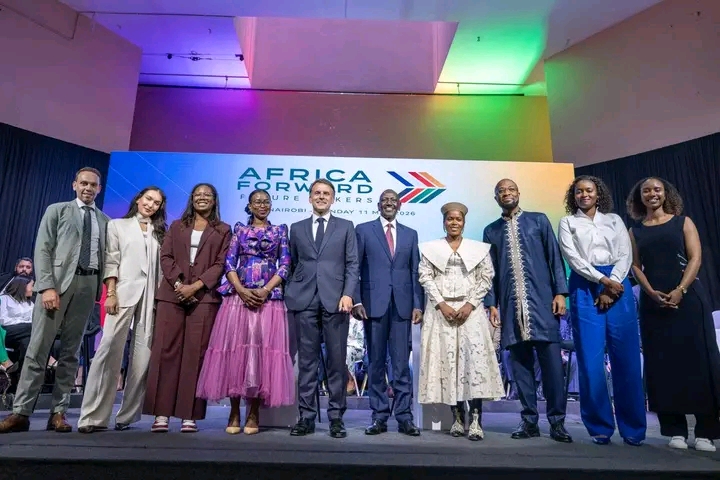
It is against this background that French President Emmanuel Macron arrived in Nairobi for a summit bringing together more than 30 African leaders, where he attempted to present a new image of France’s relationship with Africa.
Macron declared, “Africa is not a continent that I want France to view as a place where it can dominate or where French companies automatically receive all contracts… Nor is it a place where France believes it has the power to create or overthrow governments. That era is over. Since 2017, that chapter has been closed.”
At another point during the summit, Macron also claimed:
“We are the true pan-Africanists. We believe that Africa is a continent, and that this continent has an enormous amount to build.”
But across Africa, many observers heard those words with skepticism.
Pan-Africanism, historically championed by figures such as Kwame Nkrumah, Thomas Sankara, Julius Nyerere and Patrice Lumumba, was never simply the belief that Africa is a continent. It was an anti-colonial and anti-imperialist political movement aimed at uniting Africa economically, politically, and culturally against foreign domination.
For many Africans, especially in the Sahel region, France cannot easily position itself as the guardian of Pan-African ideals while simultaneously carrying the historical burden of colonialism and decades of political interference in African affairs.
The crisis facing France in Africa did not emerge overnight. It is the result of decades of accumulated anger, frustration, and growing political consciousness across the continent.
After independence movements swept across Africa in the 1950s and 1960s, France officially ended colonial rule in many territories, but critics argue that Paris never truly left. Instead, it built what became known as “Françafrique,” a complex system of political, economic, and military influence that allowed France to maintain strategic control over many former colonies.
French companies remained dominant in sectors such as mining, telecommunications, energy, infrastructure, and banking. French troops continued to operate military bases across the continent. France intervened militarily in African conflicts repeatedly, claiming to stabilize fragile governments and fight terrorism. The CFA franc currency system tied several African economies closely to the French financial structure. Paris also maintained extremely close relationships with long-serving African leaders who were often accused by critics of authoritarianism or corruption.
Supporters of France argued that Paris brought investment, security assistance, military training, development cooperation, and diplomatic support to unstable regions. France often presented itself as a reliable partner helping African states confront terrorism, insurgencies, and humanitarian crises.
However, critics increasingly argued that French involvement prevented true sovereignty from emerging. They accused Paris of supporting leaders favorable to French interests, interfering in domestic politics, exploiting natural resources, and maintaining unequal economic structures that benefited France far more than ordinary Africans.
These frustrations intensified dramatically during the security crises that engulfed the Sahel.
Countries such as Mali, Burkina Faso, and Niger became battlefields against extremist groups linked to Al-Qaeda and ISIS. French troops entered the region through operations such as Operation Serval and later Operation Barkhane, claiming they were fighting terrorism and protecting regional stability.
Initially, many Africans welcomed the intervention. But as years passed, insecurity worsened rather than improved. Terrorist attacks expanded. Civilian deaths increased. Millions were displaced. Entire regions became unstable.
In the eyes of many citizens, France appeared unable or unwilling
to solve the crisis despite its overwhelming military presence.
This growing anger became fertile political ground for military officers who seized power through coups.
In Mali, Burkina Faso, and Niger, military juntas positioned themselves as nationalist movements reclaiming sovereignty from foreign influence. Anti-French rhetoric became central to their legitimacy. Crowds waving Russian flags filled public squares while French troops were ordered to leave. French media outlets faced restrictions. Military agreements with Paris were canceled.
Although France was not solely responsible for the instability or coups, it became the symbolic target of broader frustrations involving insecurity, unemployment, poverty, governance failures, corruption, and the perceived failure of post-colonial political systems.
The rise of the Alliance of Sahel States bringing together Mali, Burkina Faso, and Niger marked one of the clearest signs that the geopolitical order in West Africa was changing rapidly. These governments openly challenged Western influence and promoted the idea of a sovereign African bloc free from foreign control.
The rejection of France in the Sahel is not only about military presence. It is deeply psychological and generational.
Young Africans today are more politically vocal, digitally connected, and historically conscious than previous generations. Through social media, podcasts, online activism, and independent African media, debates about colonialism, economic exploitation, reparations, sovereignty, and foreign influence have become mainstream.
Many young Africans increasingly question why countries rich in gold, uranium, oil, cobalt, and agricultural resources continue to face poverty, insecurity, unemployment, and debt. France, due to its historical role in West Africa, often becomes the focus of these frustrations.
At the same time, Paris is facing another major challenge: the emergence of China as Africa’s dominant external economic actor.
Over the last two decades, China has expanded its footprint across Africa at remarkable speed. Through infrastructure projects, loans, trade agreements, railways, ports, roads, telecommunications, mining investments, and energy projects, Beijing has become one of Africa’s most influential economic partners.
Unlike France, China does not carry the same colonial history in Africa. Beijing presents itself as a development partner focused on mutual economic growth and non-interference in domestic politics. This message has appealed to many African governments seeking alternatives to Western influence.
Chinese-built roads, railways, airports, stadiums, and industrial zones now stretch across the continent. From Kenya’s Standard Gauge Railway to ports in West Africa and mining operations in Central Africa, Chinese presence is visible almost everywhere.
France has struggled to compete with this scale of economic expansion.
In many ways, China has occupied spaces where France once held enormous leverage. African governments increasingly look eastward for financing, infrastructure, technology, and trade opportunities rather than depending solely on former colonial powers.
This shift has forced Paris to rethink its entire Africa strategy.
That is precisely why the Nairobi summit matters.
Macron’s Nairobi Summit and France’s Attempt to Rebrand Its Africa Policy
The summit in Nairobi was not simply another diplomatic gathering. It represented an attempt by France to redefine its role in Africa at a moment when its traditional influence is weakening dramatically.
By standing alongside William Ruto in Kenya a country outside France’s traditional Francophone sphere of influence Macron appeared to signal that France wants to broaden its partnerships beyond old colonial networks and reposition itself as a modern economic partner rather than a controlling power.
Kenya itself represents a strategic choice.
Unlike many Francophone West African states, Kenya has historically maintained stronger ties with Britain, the United States, China, and broader global markets. By engaging Nairobi, France appears eager to project a more pan-African image rather than being associated solely with former colonies where anti-French sentiment has intensified.
Macron’s language throughout the summit reflected this strategy carefully.
He repeatedly emphasized partnership, investment, innovation, climate cooperation, youth engagement, entrepreneurship, and mutual respect. He attempted to distance modern France from the image of a power that dictates African politics or manipulates governments.
This is likely an acknowledgment from Paris that the old model is no longer sustainable.
France understands that military dominance alone can no longer secure influence in Africa. The expulsion of French troops from several Sahel countries demonstrated the limits of hard power in an era of rising nationalism and anti-colonial consciousness.
Instead, Macron appears to be trying to reposition France through softer forms of influence trade, climate partnerships, education, digital technology, green investment, and cultural diplomacy.
But the challenge for France is credibility.
Many Africans question whether this “new approach” truly represents change or simply a rebranding exercise designed to preserve French interests under a different language.
Skeptics point out that while Macron speaks about partnership and equality, structural inequalities between Africa and Europe still remain significant. African economies continue exporting raw materials while importing finished goods. European corporations still dominate key sectors. Visa restrictions for Africans remain severe. Trade imbalances continue.
Others argue that France’s rhetoric has changed faster than its policies.
Even Macron’s statement that France no longer seeks to “create or overthrow governments” carries historical sensitivity because France has long been accused of influencing African political outcomes both directly and indirectly.
For many Africans, trust cannot be rebuilt through speeches alone.
At the same time, Africa itself is changing rapidly.
The continent is becoming more geopolitically competitive than ever before. China, Russia, Turkey, the Gulf states, India, the United States, and European powers are all competing for influence. African governments increasingly have multiple options for partnerships rather than relying on one dominant foreign actor.
This new reality gives African states greater bargaining power.
Countries are now able to diversify alliances, negotiate better deals, and resist external pressure more effectively than during previous decades.
France’s declining influence in West Africa therefore reflects not only French failures, but also Africa’s changing political confidence.
The coups across the Sahel, despite international criticism, revealed a powerful regional demand for sovereignty and independence from foreign control. Whether military juntas can successfully govern or stabilize their countries remains uncertain, but their rise clearly exposed the depth of anti-establishment sentiment across the region.
The larger question now is whether France can genuinely adapt to this new Africa.
If Paris truly wants a partnership-based relationship, it may need to move beyond symbolic diplomacy and confront deeper issues involving economic fairness, political respect, historical accountability, and African agency.
That includes accepting that Africa no longer sees itself merely as a sphere of influence for European powers.
The Nairobi summit may therefore mark an important transitional moment.
For France, it represents an attempt to prevent complete geopolitical decline in Africa by reshaping its image and redefining engagement.
For African leaders, it provides an opportunity to negotiate relationships on more equal terms while balancing competing global powers.
For China, the summit also signals that Europe recognizes Beijing’s growing dominance across Africa and is now scrambling to remain relevant in a continent increasingly central to the global economy.
Ultimately, the future of France-Africa relations will depend less on speeches and more on whether Africans themselves believe genuine change is taking place.
The age where foreign powers could shape Africa’s destiny without resistance is fading rapidly. A new generation of Africans is demanding sovereignty, dignity, economic independence, and control over their own resources.
Macron’s Nairobi summit was therefore more than diplomacy. It was a recognition that Africa has changed and that France must now compete, persuade, and cooperate in ways it never had to before.
Whether that transformation is sincere or strategic remains one of the defining geopolitical questions shaping Africa’s future today.